
Kontekst, nie wskazywanie celów. Ten atlas opisuje strukturę i historię. Celowo pomija bieżące lokalizacje, aktualne stany liczebne, przemieszczenia jednostek i wszystko, co wrażliwe operacyjnie — model treści nie ma na to pól. Głębokość gałęzi odzwierciedla to, co da się ustalić na podstawie publicznych źródeł, a nie wielkość, zdolności czy znaczenie danej siły: cienka gałąź oznacza, że państwo publikuje niewiele, a liczba wpisów nigdy nie jest miarą siły.
Więcej filtrów
Przejrzane profile: 119 z 160 wpisów
Pełne: 16, w trakcie przeglądu: 103. Dalsze wpisy będące strukturalnymi zalążkami: 41. Pewność, podporządkowanie i źródła są podane w każdym wpisie.
Siły Zbrojne Ukrainy
Państwowe siły zbrojne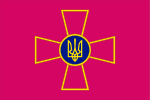 Połączone
Zjednoczone siły zbrojne państwa ukraińskiego — rodzaje sił lądowych, desantowo-szturmowych, powietrznych, morskich, piechoty morskiej, operacji specjalnych, systemów bezzałogowych i wsparcia podległe Sztabowi Generalnemu. Rozbudowane z zawodowego trzonu sprzed 2022 r. do jednej z największych wojennych armii Europy; ten atlas odnotowuje ich strukturę wyłącznie na poziomie rodzajów sił i formacji.
Wojska Lądowe
Rodzaj sił zbrojnych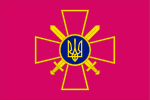 Wojska lądowe · podległe: Siły Zbrojne Ukrainy
Największy rodzaj sił — brygady zmechanizowane, zmotoryzowane i piechoty.
Wojska Desantowo-Szturmowe
Rodzaj sił zbrojnych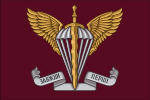 Wojska lądowe · podległe: Siły Zbrojne Ukrainy
Elitarna lekka piechota szybkiego reagowania, używana jako mobilna „straż pożarna”.
Siły Powietrzne
Rodzaj sił zbrojnych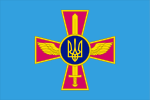 Siły powietrzne · podległe: Siły Zbrojne Ukrainy
Lotnictwo myśliwskie i naziemna obrona powietrzna — nigdy nie oddały nieba, nigdy go nie kontrolowały.
Wojska Rakietowe Obrony Przeciwlotniczej
Rodzaj sił zbrojnychSiły powietrzne · podległe: Siły PowietrzneNaziemna obrona powietrzna Sił Powietrznych — brygady i pułki rakiet ziemia-powietrze, warstwowo od starszych systemów S-300 i Buk po Patriot, IRIS-T, NASAMS i SAMP/T.
Marynarka Wojenna
Rodzaj sił zbrojnychNiewielka marynarka wojenna, która mimo to wyparła Flotę Czarnomorską z północno-zachodniej części morza.
Korpus Piechoty Morskiej
Rodzaj sił zbrojnych Marynarka wojenna · podległe: Siły Zbrojne Ukrainy
Brygady piechoty morskiej walczące przeważnie jako wojska lądowe — od obrony Mariupola po przeprawy przez Dniepr.
Siły Systemów Bezzałogowych
Rodzaj sił zbrojnychSystemy bezzałogowe · podległe: Siły Zbrojne UkrainyOdrębny rodzaj sił dronowych utworzony w 2024 r. — pierwszy taki przypadek organizacyjny.
12. Brygada Specjalna „Azow”
Brygada Wojska lądowe · podległe: 1. Korpus „Azow”
Szturmowa formacja piechoty, kojarzona przede wszystkim z obroną Mariupola w 2022 r.
KRAKEN 1654
Jednostka specjalnaCharkowska jednostka specjalna związana z wywiadem wojskowym; zyskała rozgłos podczas kontrofensywy na północnym wschodzie w 2022 r.
Siły Zbrojne Rosji
Państwowe siły zbrojne Połączone
Nadrzędna struktura sił zbrojnych państwa rosyjskiego — rodzaje sił lądowych, powietrzno-kosmicznych, powietrznodesantowych, morskich, rakietowych przeznaczenia strategicznego, operacji specjalnych, kolejowych i wsparcia materiałowo-technicznego podległe Sztabowi Generalnemu. Ten atlas odnotowuje ich strukturę wyłącznie na poziomie rodzajów sił, armii i formacji; nie publikuje rozmieszczenia, stanów liczebnych ani lokalizacji, a część walczących u ich boku struktur ochotniczych i nieregularnych celowo znajduje się poza tym drzewem.
Wojska Lądowe
Rodzaj sił zbrojnych Wojska lądowe · podległe: Siły Zbrojne Rosji
Armie ogólnowojskowe zapewniające większość sił żywych inwazji.
Siły Powietrzno-Kosmiczne (WKS)
Rodzaj sił zbrojnych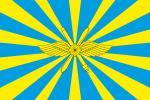 Siły powietrzne · podległe: Siły Zbrojne Rosji
Nadrzędny rodzaj sił powietrzno-kosmicznych — Siły Powietrzne, Wojska Obrony Przeciwlotniczej i Przeciwrakietowej oraz Wojska Kosmiczne; kluczowy dla kampanii bomb szybujących i uderzeń rakietowych.
Wojska Powietrznodesantowe (WDW)
Rodzaj sił zbrojnych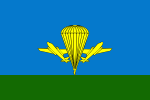 Wojska lądowe · podległe: Siły Zbrojne Rosji
Elitarna lekka piechota — doktrynalnie powietrznodesantowa, w praktyce używana jako liniowe wojska szturmowe.
Piechota morska
Rodzaj sił zbrojnychFormacje piechoty morskiej wykorzystywane jako lądowe wojska szturmowe, zwłaszcza na południu.
Grupa Wagnera → Korpus Afrykański
Rodowód prywatnej firmy wojskowejPo buncie w 2023 r. i śmierci jej założyciela struktury Wagnera zreorganizowano pod kontrolą Ministerstwa Obrony.
3. Korpus Armijny
KorpusWojska lądowe · podległe: Wojska LądoweKorpus armijny utworzony w ramach ukraińskiej reformy korpusowej z 2025 r. wokół 3. Samodzielnej Brygady Szturmowej jako formacji trzonowej.
Wojska lądowe · podległe: 3. Korpus ArmijnyBrygada szturmowa utworzona w 2022 r., jedna z najbardziej nagłośnionych formacji Ukrainy; od reformy z 2025 r. trzon 3. Korpusu Armijnego.
60. Brygada Zmechanizowana
BrygadaWojska lądowe · podległe: 3. Korpus ArmijnyMechanized brigade formed in 2016 as an infantry brigade of the reserve corps and re-roled after 2022; publicly documented in the Kherson-oblast fighting of 2022, Bakhmut in 2023 and the Kupiansk and Lyman sectors in 2024; reported to have joined the 3rd Army Corps in July 2025.
53. Brygada Zmechanizowana
BrygadaWojska lądowe · podległe: 3. Korpus ArmijnyMechanized brigade raised in 2014 and in near-continuous line service in the Donbas since — Marinka, Avdiivka and the Donetsk-city sectors; reported to have joined the 3rd Army Corps in August 2025.
63. Brygada Zmechanizowana
BrygadaWojska lądowe · podległe: 3. Korpus ArmijnyMechanized brigade in line service through the full-scale war's eastern and southern battles, publicly associated with the Lyman and Siversk sectors; reported to have joined the 3rd Army Corps in August 2025.
Wojska lądowe · podległe: 3. Korpus ArmijnyHeavy mechanized brigade formed in the later reorganisations from the 125th Territorial Defence Brigade, a Lviv formation whose 2024 Kharkiv-border record was publicly debated; reported to have joined the 3rd Army Corps in August 2025.
Wojska lądowe · podległe: Wojska LądoweLong-standing regular mechanized brigade from Yavoriv in the west, named for the medieval king of Galicia; fought in the Donbas from 2014 and through the major positional battles of the full-scale war, most publicly the long defence of Chasiv Yar in 2024. No corps assignment is published.
Wojska lądowe · podległe: Wojska LądoweBrygada zmechanizowana zbudowana wokół sprzętu zachodniego — publicznie udokumentowane użycie bojowych wozów piechoty Bradley i czołgów Abrams w ofensywie na południu w 2023 r. i później.
Wojska lądowe · podległe: Wojska LądoweDoświadczona brygada zmechanizowana, publicznie kojarzona z długą obroną Wuhłedaru w latach 2022–23.
92. Brygada Szturmowa
BrygadaWojska lądowe · podległe: Wojska LądoweKharkiv-region brigade, prominent in the September 2022 Kharkiv counteroffensive that it helped spearhead from its home ground; converted from a mechanized to an assault brigade in the later reorganisations and publicly associated with the Kupiansk and border sectors since. No corps assignment is published.
Wojska lądowe · podległe: Wojska LądoweJedna z najbardziej znanych ukraińskich brygad zmechanizowanych — Bachmut i bitwy pozycyjne w Donbasie zajmują ważne miejsce w jej publicznym dorobku.
17. Brygada Pancerna
BrygadaWojska lądowe · podległe: Wojska LądoweThe Kryvyi Rih tank brigade, one of Ukraine's small number of dedicated tank formations, reorganised in late October 2024 as the Ground Forces' first heavy mechanized brigade after its tank battalions had spent 2022–24 dispersed among mechanized brigades. No corps assignment is published.
Wojska lądowe · podległe: Wojska LądoweHeavy artillery brigade of the high-command reserve, formed in autumn 2014 — publicly documented operating the war's largest tube systems, the 203 mm 2S7 and the PzH 2000, and a fixture of the artillery duel since 2022. No corps assignment is published; the reserve status is the reason.
Wojska lądowe · podległe: Wojska Desantowo-SzturmoweJedyna spadochronowa brygada DSzW; w nieprzerwanych ciężkich walkach od bitew w Donbasie w 2022 r.
46. Brygada Aeromobilna
BrygadaWojska lądowe · podległe: Wojska Desantowo-SzturmoweAirmobile brigade committed across the war's crisis points — the defence of Soledar and Bakhmut in the winter of 2022–23, then the Orikhiv axis in the 2023 southern offensive.
77. Brygada Aeromobilna
BrygadaWojska lądowe · podległe: Wojska Desantowo-SzturmoweAirmobile brigade formed in summer 2022 in the Air Assault Forces' wartime expansion; joined the defence of Bakhmut after Soledar fell in January 2023 and has served on the eastern front since.
Wojska lądowe · podległe: Wojska Desantowo-SzturmoweAir assault brigade from Mykolaiv, publicly associated with the defence of the south in 2022, the Siverskyi Donets fighting that summer, and years of Donbas fighting since — Marinka and the Kurakhove sector among the most documented.
Wojska lądowe · podległe: Wojska Desantowo-SzturmoweAir assault brigade from Lviv with a prominent public record from Bakhmut in 2023 and the northern axes; the formation from which the 82nd Brigade was raised in December 2022.
81. Brygada Aeromobilna
BrygadaWojska lądowe · podległe: Wojska Desantowo-SzturmoweAirmobile brigade re-established in 2014–15 with a Donetsk airport lineage; long service in the Donbas including the Sloviansk front in 2022 and the Bakhmut and Siversk sectors since.
Wojska lądowe · podległe: Wojska Desantowo-SzturmoweAir assault brigade formed in December 2022 from a battalion group of the 80th Brigade and equipped with Western vehicles — Challenger 2, Marder and Stryker — publicly documented at Robotyne in the 2023 southern offensive and in the August 2024 Kursk incursion.
Wojska lądowe · podległe: Wojska Desantowo-SzturmoweVeteran air assault brigade from Zhytomyr — the 2014 "longest raid" behind separatist lines and years of front-line rotations anchor its public history; publicly documented on the Izium axis in 2022 and in the Donbas rotations, Bakhmut and Kreminna among them, since.
Siły powietrzne · podległe: Siły PowietrzneTactical aviation brigade of the MiG-29 fleet, from Vasylkiv near Kyiv — the workhorse fighter of Ukraine's wartime air defence, dispersed within hours of the February 2022 strikes and adapted to fire Western weapons before the F-16 arrived.
Siły powietrzne · podległe: Siły PowietrzneTactical aviation brigade flying the Su-27 from Myrhorod in Poltava oblast — the heavy fighter arm of the pre-F-16 fleet, dispersed in the first hours of 2022 and kept flying through the years its base was repeatedly struck.
Siły powietrzne · podległe: Wojska Rakietowe Obrony PrzeciwlotniczejThe Kyiv anti-aircraft missile brigade of the air-defence belt around the capital region — publicly documented on legacy S-300 and, from 2023, on Patriot, including the intercepts of ballistic and aeroballistic missiles over Kyiv that its commander described publicly in May 2023.
Siły Nawodne
Rodzaj sił zbrojnychThe small-boat surface component — patrol boats and minor combatants after the flagship frigate was scuttled at Mykolaiv in February 2022; the two corvettes under construction in Türkiye remain the future capital element, the first launched in 2022 and on trials since 2024.
Flotylle Rzeczne i Przybrzeżne
Rodzaj sił zbrojnychThe riverine arm — a Dnipro river flotilla raised in 2022 against the threat from the north and expanded in 2023 with a second division for the southern river, holding the estuary approaches and the Kherson reach with small craft.
Lotnictwo Marynarki Wojennej
Rodzaj sił zbrojnychThe naval air arm — a single naval aviation brigade of transport aircraft, helicopters and Bayraktar TB2 drones; publicly documented for the drone operations over Snake Island and the north-western Black Sea in 2022.
Nadbrzeżne Wojska Rakietowe i Artyleryjskie
Rodzaj sił zbrojnychNadbrzeżny komponent rakietowy — macierzysta formacja systemu Neptun, który zatopił krążownik „Moskwa”.
Bezzałogowe Siły Morskie
Rodzaj sił zbrojnychUdział marynarki wojennej w ukraińskiej kampanii dronów morskich; znaczną część publicznie znanych działań z użyciem bezzałogowych jednostek nawodnych prowadzą służby wywiadowcze, dlatego ten wpis celowo pozostaje ogólny.
Marynarka wojenna · podległe: Korpus Piechoty MorskiejBrygada piechoty morskiej z obrony Mariupola w 2022 r., odtworzona po Azowstalu; symbol wojennych kosztów korpusu.
Marynarka wojenna · podległe: Korpus Piechoty MorskiejMarine brigade with long service on the southern front — the 2023 southern offensive, where it took Urozhaine with the 38th, and the Dnipro left-bank operation at Krynky from October 2023 to the withdrawal in 2024.
Marynarka wojenna · podległe: Korpus Piechoty MorskiejMarine brigade formed in February 2023 from an existing marine battalion in the corps' expansion, and committed within months to the 2023 southern offensive, where it took Urozhaine with the 35th.
Siły Operacji Specjalnych
Rodzaj sił zbrojnych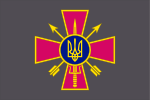 Siły specjalne · podległe: Siły Zbrojne Ukrainy
Odrębny rodzaj sił operacji specjalnych od 2016 r., zbudowany według wzorców NATO; publicznie udokumentowany jedynie w ogólnym zarysie — i tylko tyle zawiera ten atlas.
Siły Obrony Terytorialnej
Rodzaj sił zbrojnychWojska lądowe · podległe: Siły Zbrojne UkrainyRodzaj sił masowej mobilizacji utworzony w związku z inwazją z 2022 r. — regionalne brygady, które z obrony lokalnej przeszły do regularnej służby na linii frontu.
Siły Wsparcia
Rodzaj sił zbrojnychPołączone · podległe: Siły Zbrojne UkrainyInżynieria, obrona przed bronią CBRN i inne funkcje wsparcia bojowego skupione w odrębnym rodzaju sił.
Siły Logistyczne
Rodzaj sił zbrojnychPołączone · podległe: Siły Zbrojne UkrainyRodzaj sił odpowiedzialny za tyły — zaopatrzenie, transport i utrzymanie sprzętu dla milionowej armii pod stałym zagrożeniem uderzeń.
Służba Uzbrojenia
ZarządPołączone · podległe: Siły LogistyczneThe half of the Logistics Forces that owns weapons and vehicles — the central directorates for armour, automotive and missile-artillery equipment, and the repair estate behind them. The ministry publishes the Armament/Rear split and the branch's tasks; the directorate list beneath it is published compilation, which is why every child edge is graded reported.
Służba Tyłów
ZarządPołączone · podległe: Siły LogistyczneThe half of the Logistics Forces that owns consumption — fuel, food, general materiel and military signals supply, through central directorates and the storage bases beneath them. The ministry publishes the Armament/Rear split; the directorate list is published compilation and every child edge is graded reported for that reason.
Siły Medyczne
Rodzaj sił zbrojnychPołączone · podległe: Siły Zbrojne UkrainyWojskowa służba medyczna — ewakuacja i leczenie rannych na skalę niewidzianą w Europie od 1945 r.
Połączone · podległe: Siły MedyczneThe Kyiv centre at the top of the military medical system — the Main Military Clinical Hospital, the referral end of an evacuation chain that begins at a casualty collection point hundreds of kilometres away, and the clinical base of the Military Medical Academy.
Ukraińska Wojskowa Akademia Medyczna
InstytucjaPołączone · podległe: Siły MedyczneThe training and doctrine institution of the medical branch, founded by Cabinet resolution on 13 January 1993 — where the wartime revisions to Ukrainian battlefield medicine are taught, and the constraint on how fast the branch can grow.
Gwardia Narodowa
Siły wewnętrzneSiły wewnętrzne / bezpieczeństwaForces under the Ministry of Internal Affairs fighting alongside the army — a parallel military strand whose combat brigades hold front-line sectors under operational control of the AFU's commands while remaining institutionally interior. Its two corps of 2025 — the 1st built around Azov, the 2nd around Khartiia — are the most publicly documented example.
1. Korpus „Azow”
KorpusWojska lądowe · podległe: Gwardia NarodowaPierwszy korpus armijny Gwardii Narodowej, utworzony w 2025 r. wokół brygady „Azow” jako trzonu — część szerszego przejścia Ukrainy na dowodzenie na szczeblu korpusu.
2nd Corps "Khartiia"
KorpusWojska lądowe · podległe: Gwardia NarodowaThe National Guard's second army corps, announced on 15 April 2025 and built on the 13th Brigade "Khartiia", whose commander leads it — the Kharkiv counterpart to the Azov-built 1st Corps in the Guard's 2025 corps reform.
13. Brygada „Chartija”
BrygadaLand · under 2nd Corps "Khartiia"Kharkiv-raised National Guard brigade known for technology-heavy operations, and since 15 April 2025 the core of the National Guard's second corps, which its commander leads.
Land · under 2nd Corps "Khartiia"National Guard operational brigade raised in 2015 with a strong public combat record from the Kyiv airport fighting in 2022 and Bakhmut in 2023; reported assigned to the Guard's second corps in 2025 and attached to the 1st Corps for the Pokrovsk–Dobropillia sector in 2026.
Państwowa Służba Graniczna
Siły wewnętrzne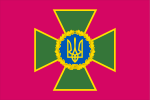 Siły wewnętrzne / bezpieczeństwa
Zmilitaryzowana służba graniczna poza Siłami Zbrojnymi; jej oddziały walczą na linii frontu od 2022 r., najbardziej widocznie w obronie Mariupola.
Formacje powiązane z wywiadem i służbami bezpieczeństwa
Zgrupowanie · nie dowództwoCombat formations publicly associated with intelligence and security services (HUR/GUR, SBU). A browsing group, not a command — the two services answer to different institutions (the Ministry of Defence and, for the SBU, the President), each member's actual parent is stated on its own record, and much of this space is deliberately under-documented.
Wywiad Wojskowy Ukrainy (HUR/GUR)
Rodzaj sił zbrojnychSłużba wywiadu wojskowego, której operacje bojowe stały się publicznie eksponowaną częścią wojny — w tym kampania dronów morskich powszechnie jej przypisywana w publicznych doniesieniach. Celowo słabo udokumentowana tutaj: odnotowuje się wyłącznie publicznie deklarowane lub szeroko opisywane powiązania.
Służba Bezpieczeństwa Ukrainy (SBU) — elementy bojowe
Rodzaj sił zbrojnych Siły specjalne · podległe: Formacje powiązane z wywiadem i służbami bezpieczeństwa
The security service's publicly known combat arm — its special operations centre and the directorate publicly associated with the Sea Baby maritime drones, the 2023 Crimean Bridge strike and the June 2025 strikes on strategic bomber airfields. Recorded here only to the extent of public claims and wide reporting.
Formacje zagraniczne i opozycyjne
Zgrupowanie · nie dowództwoForeign volunteer and anti-Kremlin opposition formations fighting on the Ukrainian side. A browsing group only — these organisations do NOT share a command; each serves under its own documented Ukrainian parent structure, stated on each record. Two frameworks recur beneath the grouping: the International Legion created in February 2022 under the Ground Forces, and the formations publicly associated with Defence Intelligence.
Legion „Wolność Rosji”
Formacja ochotniczaRosyjski legion ochotniczy walczący po stronie Ukrainy od 2022 r.; publicznie kojarzony z transgranicznymi rajdami w obwód biełgorodzki w latach 2023–24.
Pułk im. Kastusia Kalinowskiego
Formacja ochotniczaBelarusian volunteer regiment formed as a battalion in March 2022 and raised to a regiment in May 2022 — the largest Belarusian formation on the Ukrainian side, reported within the Armed Forces under Defence Intelligence, and the parent of several successor and breakaway Belarusian units.
Legion Międzynarodowy
Formacja ochotniczaThe formal framework for foreign volunteers in Ukrainian service, announced on 27 February 2022 and raised under the Ground Forces; its combat battalions were folded into assault regiments in the 2024 reorganisation, so the Legion is carried as a lineage record rather than a standing unit.
Moskiewski Okręg Wojskowy
Okręg wojskowyWojska lądowe · podległe: Wojska LądoweOkręg wojskowy przywrócony w 2024 r. w wyniku podziału Zachodniego OW; w czasie pokoju nadrzędny wobec 1. Gwardyjskiej Armii Pancernej i 20. Armii Ogólnowojskowej.
Wojska lądowe · podległe: Moskiewski Okręg WojskowyNajważniejsza armia pancerna, zbudowana do intensywnej wojny manewrowej; mocno poturbowana w walkach pod Charkowem w 2022 r. i od tego czasu odtwarzana.
Wojska lądowe · podległe: 1. Gwardyjska Armia PancernaThe prestige Kantemirovite tank division of the 1st Guards Tank Army, from Naro-Fominsk; its retreat from the Izium sector in September 2022, with independently counted T-80 losses of around half its strength, was among the most visible Russian losses of the war. Reconstituted and tracked on the Svatove–Kreminna sector since.
Wojska lądowe · podległe: 1. Gwardyjska Armia PancernaThe Taman division of the 1st Guards Tank Army — Moscow's ceremonial and showcase formation, the first publicly fielding the T-90M — turned into a line division: the Izium bridgehead in spring 2022, the September retreat, and the Kupiansk axis since.
Wojska lądowe · podległe: Moskiewski Okręg WojskowyCombined-arms army of the old Western MD, since 2024 under the re-created Moscow MD; parent of the 3rd and 144th Motor Rifle Divisions re-formed in 2016, and engaged on the north-eastern axes through the war.
Wojska lądowe · podległe: 20. Gwardyjska Armia OgólnowojskowaMotor-rifle division of the 20th Army re-formed in 2016 at Valuyki in Belgorod oblast, on the Ukrainian border itself; committed on the Kharkiv axis in 2022 and tracked on the Kupiansk sector since.
Wojska lądowe · podległe: 20. Gwardyjska Armia OgólnowojskowaMotor-rifle division of the 20th Army re-established in 2016 in Smolensk oblast as part of the return to divisions on the western frontier; committed on the northern axes in 2022 and tracked on the Svatove–Kreminna line since.
Leningradzki Okręg Wojskowy
Okręg wojskowyWojska lądowe · podległe: Wojska LądoweMilitary district re-established on 1 March 2024 from the Western MD split, oriented toward the Baltic and Finland and including the Kaliningrad exclave; peacetime parent of the 6th Combined Arms Army.
Wojska lądowe · podległe: Leningradzki Okręg WojskowyThe Leningrad Military District's army-level formation — re-formed in the 2010 reform as the Western district's north-western army, engaged on the Kharkiv axis in the full-scale war, and assessed in 2026 to hold divisions in which UAV battalions are expected to be raised.
Południowy Okręg Wojskowy
Okręg wojskowyWojska lądowe · podległe: Wojska LądoweOkręg wojskowy zwrócony ku Morzu Czarnemu i Kaukazowi — główny okręg przygotowania sił w tej wojnie i w czasie pokoju okręg nadrzędny wobec 8. i 58. armii.
Wojska lądowe · podległe: Południowy Okręg WojskowySouthern MD army re-formed in 2017 at Novocherkassk, on the Donbas border, around a division re-established the year before; closely associated with the Donetsk axis since 2022, from the Mariupol operation to the Donetsk-city sectors, and the first Russian parent of the former separatist corps after the 2022 annexations.
Wojska lądowe · podległe: Południowy Okręg WojskowyNorth Caucasus army headquartered at Vladikavkaz; held the Zaporizhzhia line against the 2023 Ukrainian offensive — Moscow's most consequential defensive success of the war — and lost its commander that July after he complained publicly of attrition and rotation.
Wojska lądowe · podległe: 58. Armia OgólnowojskowaThe 58th Army's Chechnya-garrisoned motor-rifle division, re-formed in 2016 from three brigades; a backbone of the 2023 Zaporizhzhia defence in the Robotyne–Verbove sector, holding the fortified belts against the Ukrainian offensive.
Centralny Okręg Wojskowy
Okręg wojskowyWojska lądowe · podległe: Wojska LądoweOkręg wojskowy obejmujący Powołże, Ural i Syberię; w czasie pokoju nadrzędny wobec 2. i 41. armii.
Wojska lądowe · podległe: Centralny Okręg WojskowyVolga-region combined-arms army headquartered at Samara, committed since the first weeks of the invasion on the Kharkiv and Izium axes and tracked on the Kupiansk–Lyman sector since.
Wojska lądowe · podległe: Centralny Okręg WojskowySiberian combined-arms army headquartered at Novosibirsk; committed in the 2022 northern operation around Chernihiv, where its deputy commander was publicly reported killed, and tracked on the Svatove–Kreminna line since.
Wschodni Okręg Wojskowy
Okręg wojskowyWojska lądowe · podległe: Wojska LądoweDalekowschodni okręg wojskowy; jego formacje, w tym 5. Armia Ogólnowojskowa, zostały przerzucone na zachód na potrzeby wojny.
Wojska lądowe · podległe: Wschodni Okręg WojskowyFar Eastern combined-arms army headquartered at Ussuriysk, deployed west in 2022; long service on the southern Donetsk axis from the Vuhledar assaults to the 2024 capture of Kurakhove, for which the ministry publicly commended its brigades.
Siły Powietrzne
Rodzaj sił zbrojnych Siły powietrzne · podległe: Siły Powietrzno-Kosmiczne (WKS)
Bojowy komponent lotnictwa płatowcowego w ramach Sił Powietrzno-Kosmicznych — lotnictwo myśliwskie, uderzeniowe, wojsk lądowych, transportowe i dalekiego zasięgu.
Lotnictwo Dalekiego Zasięgu
DowodzenieSiły powietrzne · podległe: Siły PowietrzneDowództwo strategicznego lotnictwa bombowego — floty Tu-95MS, Tu-160 i Tu-22M3, które prowadzą kampanię pocisków manewrujących przeciwko ukraińskiej infrastrukturze.
Wojska Obrony Przeciwlotniczej i Przeciwrakietowej
Rodzaj sił zbrojnychSiły powietrzne · podległe: Siły Powietrzno-Kosmiczne (WKS)Naziemny komponent obrony przeciwlotniczej i przeciwrakietowej Sił Powietrzno-Kosmicznych, warstwowy od obrony punktowej po systemy strategiczne.
Wojska lądowe · podległe: Wojska Powietrznodesantowe (WDW)Pskowska dywizja desantowo-szturmowa — jedna z najintensywniej używanych i najlepiej publicznie udokumentowanych formacji WDW w tej wojnie.
Wojska lądowe · podległe: Wojska Powietrznodesantowe (WDW)The Ivanovo airborne division, committed across the war's axes — the 2022 Kyiv operation, then the Bakhmut flanks in 2023, where its regiments were publicly identified — and used, like the rest of the VDV, as line assault infantry.
Wojska lądowe · podległe: Wojska Powietrznodesantowe (WDW)The Tula airborne division, one of the VDV's two parachute divisions; withdrawn from the 2022 northern operation via Belarus, then given the long Bakhmut-flank commitment of 2023, where both its regiments were publicly identified.
Wojska lądowe · podległe: Wojska Powietrznodesantowe (WDW)The Novorossiysk mountain air-assault division — the VDV's southern formation, engaged from the 2022 Kherson operation onward and publicly prominent in the 2023 defence of the Zaporizhzhia line at Robotyne.
Wojska lądowe · podległe: Wojska Powietrznodesantowe (WDW)Separate air-assault brigade from Buryatia in the Far East, one of the VDV's independent brigades; documented in the war from the 2022 northern operation onward and employed as line assault infantry since.
Wojska lądowe · podległe: Wojska Powietrznodesantowe (WDW)Separate air-assault brigade from Ussuriysk in the Far East, formed in 1986; publicly placed in the Kyiv-axis occupation zone in 2022 and committed on the southern and eastern axes since.
Marynarka Wojenna
Rodzaj sił zbrojnychKomponent morski — w tej wojnie zdefiniowany przez straty Floty Czarnomorskiej zadane przez marynarkę bez okrętów dużych klas oraz przez uderzenia pociskami Kalibr z odległych akwenów.
Flota Czarnomorska
FlotaFlota w centrum wojny: okręt flagowy utracony w wyniku trafienia pociskami w 2022 r., dowództwo i bazy wielokrotnie atakowane, a główne jednostki według publicznych doniesień przeniesione z Sewastopola na wschód.
Flotylla Kaspijska
FlotyllaSmall flotilla with outsized reach — the force that fired the first ship-launched Kalibr strikes into Syria in October 2015 and an early launch platform for Kalibr strikes into Ukraine; based at Kaspiysk since its relocation from Astrakhan in 2020.
Flota Północna
FlotaThe Arctic-based strategic fleet — home of most of Russia's ballistic-missile submarines — stripped of its joint strategic command status in February 2024 when its regions passed to the re-created Leningrad Military District; peripheral to the Black Sea theatre but a source of Kalibr-capable units and a naval-infantry brigade for the land war.
The Far Eastern fleet, in this war a source of formations rather than of ships: its two naval-infantry brigades were committed to the land war from 2022, mauled in the Vuhledar assaults, and the Vladivostok brigade was announced re-formed as a division in December 2025.
Flota Bałtycka
FlotaThe Russian fleet of the Baltic — based in the Kaliningrad exclave and at the head of the Gulf of Finland, answering to the Navy's main command since the 2024 command reform; contributes naval infantry and coastal formations to the land war, and was assessed in 2026 to have formed a regiment of unmanned naval strike vehicles.
Siły Podwodne
Rodzaj sił zbrojnychThe submarine arm — Improved Kilo boats of the Black Sea Fleet are among the war's persistent Kalibr shooters, the platform Ukrainian defences can least answer; one was publicly documented destroyed in dry dock at Sevastopol in 2023 and another struck by an underwater drone at Novorossiysk in December 2025, by Ukrainian claim.
Lotnictwo Marynarki Wojennej
Rodzaj sił zbrojnychThe fleet air arms — maritime patrol, anti-ship strike and shipborne helicopter forces organised per fleet; in this war the Black Sea Fleet's arm, whose Crimean airfields were struck from August 2022 and whose fighter regiment's losses have been independently counted.
Nadbrzeżne Wojska Rakietowe i Artyleryjskie
Rodzaj sił zbrojnychShore-based anti-ship missile forces — the Bastion and Bal systems held by each fleet's coastal troops — which in this war have been fired from Crimea at land targets around Odesa as often as at ships.
Pacific Fleet naval infantry formation — the much-reconstituted 155th Brigade of the Vuhledar assaults, whose re-formation as the 55th Division the fleet announced on 1 December 2025, reviving a division that existed from 1968 to 2009.
Brygada piechoty morskiej Floty Czarnomorskiej; intensywna udokumentowana służba od Mariupola po walki przygraniczne w 2024 r.
Pacific Fleet marine brigade from Kamchatka, committed to the land war and publicly documented spearheading the unsuccessful assaults on Vuhledar in 2022–23 alongside the 155th Brigade.
The Northern Fleet's marine brigade from the Sputnik garrison in Murmansk oblast, part of the amphibious grouping sent to the Black Sea before the invasion and documented on multiple axes of the land war since.
Piechota morska Floty Bałtyckiej w Bałtijsku, skierowana do wojny lądowej jako 336. Brygada Gwardii; w grudniu 2025 ogłoszono jej rozwinięcie do szczebla dywizji. Oznaczenie samej dywizji jest znane z doniesień, niepotwierdzone.
Siły Operacji Specjalnych
Rodzaj sił zbrojnychSiły specjalne · podległe: Siły Zbrojne RosjiOdrębne dowództwo operacji specjalnych (SSO) utworzone w 2013 r.; publicznie udokumentowane jedynie w ogólnym zarysie — i tylko tyle zawiera ten atlas.
Wojska Kolejowe
Rodzaj sił zbrojnych Wojska lądowe · podległe: Siły Zbrojne Rosji
A dedicated railway-engineering arm within the armed forces' material-technical support system — a Russian structural particularity that matters in a war supplied overwhelmingly by rail, and the builder of the 2024 line through occupied territory that bypasses the Crimean Bridge.
Logistyka i wsparcie (MTO)
Rodzaj sił zbrojnych Połączone · podległe: Siły Zbrojne Rosji
Struktury zabezpieczenia materiałowo-technicznego — służby tyłowe utrzymujące siły i powracający cel ukraińskich uderzeń w głąb.
Rosgwardia
Siły wewnętrzneGwardia Narodowa Rosji — ochrona tyłów, okupacja i funkcje kontroli wewnętrznej.
Formacje czeczeńskie i formacje Achmat
Zgrupowanie · nie dowództwoFormacje rekrutowane w Czeczenii lub posługujące się czeczeńską marką. Wyraźnie NIE jest to zjednoczona „armia czeczeńska”: „Achmat” to częściowo oficjalna nazwa, a częściowo marka, a faktyczne struktury nadrzędne są różne — Ministerstwo Obrony, Rosgwardia lub czeczeńskie Ministerstwo Spraw Wewnętrznych — jak podano we wpisie każdej formacji.
Dawne formacje Doniecka i Ługańska
Zgrupowanie · nie dowództwoThe former "people's republic" corps and their notable formations of 2014–2022. A historical and lineage category: after the 2022 annexations these structures were absorbed into regular Russian ones — the two corps reported re-formed as the 51st and 3rd Combined Arms Armies in 2024 — and are not shown here as if unchanged.
1. Korpus Armijny (DRL)
KorpusKorpus doniecka „republiki ludowej” z lat 2014–2022; po aneksji włączony do regularnych struktur rosyjskich, według doniesień jako 51. Armia Ogólnowojskowa.
2. Korpus Armijny (ŁRL)
KorpusThe Luhansk counterpart corps of 2014–2022; formally incorporated into the Russian armed forces after the annexation and reported re-formed as the 3rd Combined Arms Army in 2024 — carried as a lineage record.
Dowództwo Operacyjne „Północ”
DowodzenieWojska lądowe · podległe: Wojska LądoweOne of the Ground Forces' four territorial operational commands, covering the north and the Belarusian border. The 2025–26 corps reform placed the new army corps beneath the four commands rather than abolishing them; the corps under this command are reported but not carried as records, so the tree ends here by design.
Dowództwo Operacyjne „Południe”
DowodzenieWojska lądowe · podległe: Wojska LądoweOne of the Ground Forces' four territorial operational commands, covering the south and the lower Dnipro. The 2025–26 corps reform placed the new army corps beneath the four commands rather than abolishing them; the corps under this command are reported but not carried as records, so the tree ends here by design.
Dowództwo Operacyjne „Wschód”
DowodzenieWojska lądowe · podległe: Wojska LądoweOne of the Ground Forces' four territorial operational commands, covering the east. The 2025–26 corps reform placed the new army corps beneath the four commands rather than abolishing them; the corps under this command are reported (the 20th Army Corps among them) but are not carried as records, so the command's tree ends here by design.
Dowództwo Operacyjne „Zachód”
DowodzenieWojska lądowe · podległe: Wojska LądoweOne of the Ground Forces' four territorial operational commands, covering the west — the rear, the training base and the border with NATO states. The 2025–26 corps reform placed the new army corps beneath the four commands rather than abolishing them; the corps under this command are reported but not carried as records, so the tree ends here by design.
Dowództwo Powietrzne „Centrum”
DowodzenieSiły powietrzne · podległe: Siły PowietrzneOne of the Air Force's four regional air commands, covering the capital region and central Ukraine; each command combines aviation, surface-to-air missile and radio-technical forces for its sector. The Air Force publishes the four commands but not their brigade lists, so none is drawn beneath it.
Dowództwo Powietrzne „Wschód”
DowodzenieSiły powietrzne · podległe: Siły PowietrzneOne of the Air Force's four regional air commands, covering the east and the air defence of the front-line rear; each command combines aviation, surface-to-air missile and radio-technical forces for its sector. The Air Force publishes the four commands but not their brigade lists, so none is drawn beneath it.
Dowództwo Powietrzne „Południe”
DowodzenieSiły powietrzne · podległe: Siły PowietrzneOne of the Air Force's four regional air commands, covering the south and the Black Sea coast; each command combines aviation, surface-to-air missile and radio-technical forces for its sector. The Air Force publishes the four commands but not their brigade lists, so none is drawn beneath it.
Dowództwo Powietrzne „Zachód”
DowodzenieSiły powietrzne · podległe: Siły PowietrzneOne of the Air Force's four regional air commands, covering the west and the approaches from Belarus and over NATO's border; each command combines aviation, surface-to-air missile and radio-technical forces for its sector. The Air Force publishes the four commands but not their brigade lists, so none is drawn beneath it.
Połączone · podległe: Służba UzbrojeniaArmoured-vehicle equipment across the force: pattern management, repair policy and the recovery of a fleet that has absorbed heavy losses and heavy foreign resupply at once. Carried from published compilation of the Armament service's structure; the ministry names the service, not the directorate.
Połączone · podległe: Służba UzbrojeniaThe soft-skinned fleet — trucks, tractors and light vehicles — which is what actually moves a war of this size when the railway stops. Carried from published compilation of the Armament service's structure; the ministry names the service, not the directorate.
Połączone · podległe: Służba UzbrojeniaGuns, launchers and above all ammunition: the directorate at the centre of the war’s defining scarcity. Carried from published compilation of the Armament service's structure; the ministry names the service, not the directorate.
63. Baza Remontowa
Skład / bazaPołączone · podległe: Służba UzbrojeniaA named repair establishment under the armament service — the kind of rear installation whose throughput, not its existence, is the analytically interesting quantity. Carried from published compilation as the representative of a repair estate the ministry describes only generically.
Połączone · podległe: Służba TyłówFuel supply for the whole force, run against an energy system that has been a declared strike target since 2022. Carried from published compilation of the Rear service's structure; the ministry names the service, not the directorate.
Połączone · podległe: Służba TyłówRations and food supply — the least discussed and most continuous of the sustainment problems. Carried from published compilation of the Rear service's structure; the ministry names the service, not the directorate.
Połączone · podległe: Służba TyłówClothing, equipment and general materiel: the directorate that absorbed the largest share of donated non-lethal aid. Carried from published compilation of the Rear service's structure; the ministry names the service, not the directorate.
Połączone · podległe: Służba TyłówCommunications equipment as a supply problem rather than an operational one — issue, repair and replacement of the radios a dispersed force runs on. Carried from published compilation of the Rear service's structure; the ministry names the service, not the directorate.
Połączone · podległe: Siły MedyczneThe Lviv regional centre: the western end of the evacuation chain, and the closest large military hospital to the Polish border and onward treatment abroad. One of the five regional centres the branch publishes; capacity and caseload are not.
Połączone · podległe: Siły MedyczneThe Odesa regional centre, covering the southern axis and the coast. One of the five regional centres the branch publishes; capacity and caseload are not.
Połączone · podległe: Siły MedyczneThe Kharkiv regional centre — a major military hospital inside a city that has itself been under repeated strike since 2022. One of the five regional centres the branch publishes; capacity and caseload are not.
Połączone · podległe: Siły MedyczneThe Dnipro regional centre, the principal receiving hospital for the eastern front and by wide reporting the busiest node in the chain. One of the five regional centres the branch publishes; capacity and caseload are not.
Połączone · podległe: Siły MedyczneThe Vinnytsia regional centre, covering the central rear and part of the onward-treatment flow. One of the five regional centres the branch publishes; capacity and caseload are not.
Wojskowe szpitale mobilne
InstytucjaPołączone · podległe: Siły MedyczneThe numbered mobile hospitals (59th, 61st, 65th, 66th and 71st) as one record at the level this atlas works: deployable surgical capacity sitting between front-line stabilisation and the regional clinical centres. A category record by design; where any of them is deployed is never authored.
Formacje Ministerstwa Spraw Wewnętrznych
Zgrupowanie · nie dowództwoCombat formations raised under the Interior Ministry outside the National Guard — police-based assault units, most visibly the assault brigade the ministry's Offensive Guard programme raised from police special-purpose regiments in 2023. A browsing group, not a command; each member's actual parent institution would be stated on its own record. The group currently has no records beneath it, which is a research gap and not a claim that none exist.
Rosyjskie formacje antykremlowskie
Zgrupowanie · nie dowództwoFormations of Russian citizens fighting against Moscow on the Ukrainian side — the Freedom of Russia Legion, the Russian Volunteer Corps and the Siberian Battalion, publicly associated with Defence Intelligence and named together in the 2023–24 cross-border raids. A browsing group, not a command: each unit's Ukrainian parent structure is stated, and graded, on its record.
Rosyjski Korpus Ochotniczy (RDK)
Formacja ochotnicza Formacje ochotnicze / nieregularne · podległe: Rosyjskie formacje antykremlowskie
Russian émigré volunteer corps formed in 2022, publicly known for the 2023–24 cross-border raids into Bryansk, Belgorod and Kursk regions; its politics and command relationships are contested in public reporting — described by Ukrainian officials at different times as an independent organisation and as a formation Ukraine helps, and by reporting as associated with Defence Intelligence.
Batalion Syberyjski
Formacja ochotniczaVolunteer unit of Russian citizens formed within Ukrainian military structures in October 2023 — publicly confirmed by Kyiv at the time — and named with the Freedom of Russia Legion and the RDK in the March 2024 cross-border raids. Reported as part of Defence Intelligence's international legion; public information beyond that is thin and largely self-published.
Białoruskie formacje ochotnicze
Zgrupowanie · nie dowództwoBelarusian volunteer formations fighting on the Ukrainian side, of which the Kalinoŭski Regiment raised in March 2022 is the largest and the only one carried here. A browsing group, not a command; the regiment's own record states its reported parent.
Formacje czeczeńskie i iczkeryjskie
Zgrupowanie · nie dowództwoChechen formations aligned with the Ichkerian cause fighting on Ukraine's side since 2014 — distinct from, and opposed to, the Kadyrov-aligned units on the Russian side. A browsing group, not a command: the two battalions carried here have different relationships to Ukrainian structures, stated on their own records.
Batalion im. Dżochara Dudajewa
Formacja ochotniczaChechen volunteer battalion named for Ichkeria's first president, formed in 2014 by a veteran of the Chechen wars and active on the Ukrainian side since; described in reporting as within Ukrainian force structures and filed by compilation under Defence Intelligence, neither of which is a published subordination.
Batalion im. Szejka Mansura
Formacja ochotniczaChechen volunteer battalion of veterans of the two Chechen wars, active on the Ukrainian side since 2014 and re-formed in March 2022; by consistent public accounts the one Chechen unit that has remained a volunteer formation outside formal Ukrainian force structures.
Inne zagraniczne formacje ochotnicze
Zgrupowanie · nie dowództwoReviewed foreign volunteer formations outside the Russian, Belarusian and Chechen groups — in practice the International Legion of February 2022, the Ground Forces' legal framework for foreign volunteers, carried as a lineage record after its 2024 reorganisation. A browsing group, not a command.
Zagraniczni wspierający
ZewnętrznyWęzeł porządkujący, a nie dowództwo. Państwa wspierające Kijów — Stany Zjednoczone, Unia Europejska, NATO i Polska — dostarczają broń, finansowanie, dane wywiadowcze i tranzyt, a nie siły, i żadne z nich nie dowodzi niczym w tym drzewie. Każde ma obecnie własny profil strategiczny, obejmujący deklarowane cele i cele w ocenie Vigil, ograniczenia oraz dźwignie, w sekcji Profile.
Wojska Kosmiczne
Rodzaj sił zbrojnychSiły powietrzne · podległe: Siły Powietrzno-Kosmiczne (WKS)The military-space component of the Aerospace Forces — launch from the Plesetsk cosmodrome, satellite control and the missile attack warning system. Its contribution to this war (reconnaissance, navigation, warning) is structural rather than documented, and the atlas does not author it.
Wojska lądowe · podległe: Wojska Powietrznodesantowe (WDW)Ulyanovsk air-assault brigade, documented in the war from 2022; publicly reported to have become the basis of the re-formed 104th Guards Air Assault Division in September 2023, a plan announced in 2015 — carried here as a lineage record pending source review of the successor.
Wojska Rakietowe Przeznaczenia Strategicznego
Rodzaj sił zbrojnych Połączone · podległe: Siły Zbrojne Rosji
The land-based strategic nuclear arm — a separate branch of the armed forces alongside the ground, aerospace and naval services. Listed for structural completeness only: this atlas deliberately carries no detail below this line, by policy rather than for want of sources.
Formacje ochotnicze Ministerstwa Obrony
Zgrupowanie · nie dowództwoVolunteer and contract formations raised under Ministry of Defence structures — the BARS combat-reserve detachments and the formations recruited through the Redut shell. A browsing group, not a single command: each member's documented parent is stated on its record, and both members are category records because the ministry publishes no list of the units.
Formacje bojowej rezerwy BARS
Formacja ochotniczaThe Ministry of Defence's combat army reserve, created in 2015 on a part-time contract model and expanded from 2022 into numbered volunteer detachments across the front — a category record; individual detachments are not tracked here because no list of them is published.
Formacje powiązane z Redutem
Formacja ochotniczaVolunteer formations recruited through the Redut structure — described by investigative reporting and UK Defence Intelligence as a recruitment shell operated for Russian military intelligence, whose contractors were offered ministry contracts after 2022 and which fed more than twenty formations. A category record: the composition is deliberately opaque in public reporting.
Siły Specjalnego Przeznaczenia „Achmat”
Formacja ochotniczaThe best-known Akhmat-branded formation — a Ministry of Defence-subordinated volunteer unit publicly fronted by the Chechen leadership, whose commander was appointed to a ministry post in 2024. Branding and structure are entangled by design: the unit publicly claims roles (Bakhmut 2023, the Belgorod and Kursk border in 2023–24) that independent reporting confirms only in part.
Rosgvardia regiment recruited in Chechnya — the 'Kadyrovite' core formation, documented in the war from the 2022 Kyiv operation onward. Its formal parent is the National Guard's Chechen directorate; the Akhmat grouping above it is navigation only, and its combat record since 2022 is contested in public reporting.
Batalion „Sparta”
BatalionThe best-known Donetsk separatist battalion of 2014, named in 2017 for its assassinated first commander; later a reconnaissance unit of the 1st Army Corps and, by public reporting, of the corps' Russian successor — carried as a lineage record because its current designation is not consistently reported.
Żadne formacje nie odpowiadają bieżącym filtrom.
Aktywne: