
The finding
The question this Note set out to answer is what Algeria has actually committed to Niger, and how much of what is said about it the evidence supports. The working proposition was that the October decision marks a departure from Algeria’s long reluctance to send its army abroad, driven by energy and economic interests, and that the documents establishing it do not by themselves establish a large, permanent or independent Algerian force inside Niger. The research supports that proposition, and sharpens it in two places.
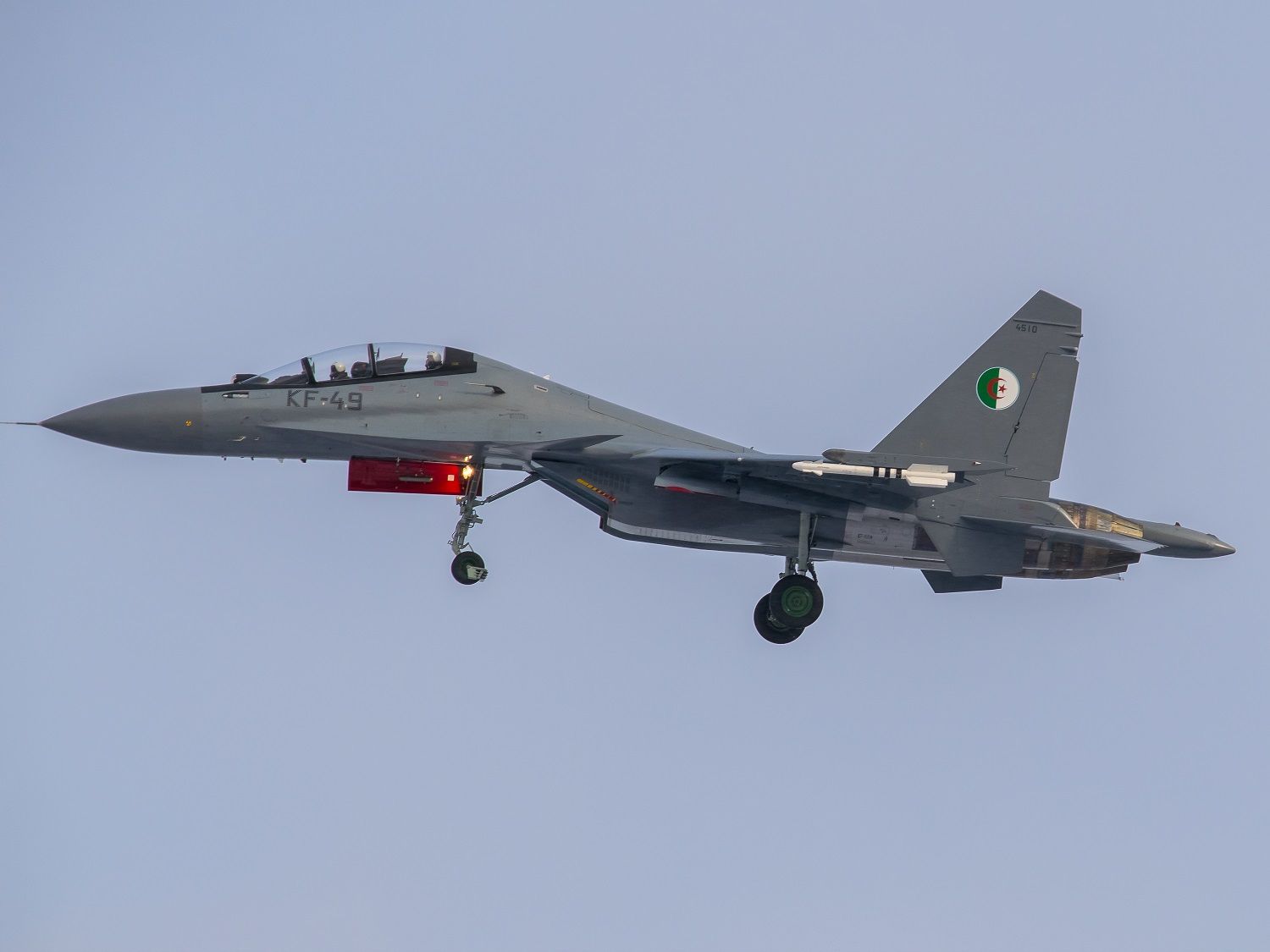
The first is that the threshold Algeria crossed in October is a legal one. A military presence on Nigerien soil at Niger’s request was not new: Algerian fighter aircraft landed at Niamey on 30 August, during the mutiny, on the defence ministry’s own announcement, and no parliamentary vote preceded them by any account read. What October added was the procedure. On 25 October both chambers approved, in closed session, the president’s notification of a deployment of army units to Niger; on 26 October President Abdelmadjid Tebboune announced the decision, “to protect the common energy and economic interests” of the two states. It is, by every account read, the first use of the constitutional power to send units abroad since the 2020 revision created it, and the first deployment of Algerian ground units abroad since the army fought beside Egypt in 1973.
The second is that the most authoritative statement since then has not narrowed the gap between decision and presence. On 9 November the chief of staff, General Saïd Chanegriha, addressing officers of the 2nd Military Region in remarks carried by a defence ministry communiqué, described Tebboune’s “historic decision” to send a military formation to northern Niger, at the request of the Nigerien authorities, to protect joint energy facilities and projects. It is the clearest official account of the mission there is. It is an account of a decision to send. It names no unit, no strength, no site and no date, and it does not say the formation has moved.
Between the two sits the one thing that has been observed. On 31 October a convoy of 53 Algerian tanker trucks carrying 1.65 million litres of petroleum products from the Adrar refinery reached Agadez, escorted, by the accounts of Niger’s public broadcaster and RFI, by Algerian and then Nigerien soldiers. Niger’s prime minister’s office said the Algerian troops were there to secure the transport, not to conduct a military mission. That is the whole of the documented Algerian military activity in Niger since the vote.
Vigil's classificationEvidence by stage · as of
Where the public evidence stops
Three Algerian military commitments to Niger in 2026, each classified against the same stages. Further right is not more serious or more likely; it is only further along a process. A cell that says "not established" is a fact about the public record.
| Case | Decideda published decision or order | Describedmission stated officially | Observed in NigerAlgerian personnel reported there | Stationeda unit at a named site | Sustainedrepeated or rotated over time |
|---|---|---|---|---|---|
| Fighter detachment at Niamey, August 2026No parliamentary vote preceded it by any account read, and no action by the aircraft has been reported. | DocumentedDefence ministry, 30 Aug, at Niger's request | DocumentedSupport against an attempt to destabilise the state | DocumentedLanded at Niamey (ministry); confirmed by Tebboune, 3 Oct | Not establishedNo account of whether the aircraft remain | Not established |
| Escort of the first fuel convoy, 31 October 2026Neither state's official print account of the delivery mentions troops; the escort rests on Niger's broadcaster and RFI. | Not establishedNo order describing the escort published | DocumentedTransport security, not a military mission (Niger PM's office) | DocumentedAlgerian and Nigerien escorts to Agadez (RTN; RFI) | Does not apply | Not establishedNo second convoy found to 11 Nov |
| The formation for northern Niger, authorised October 2026No strength, composition, site, duration or rules of engagement have been published. | DocumentedParliament 25 Oct; president 26 Oct | DocumentedJoint energy facilities and projects (chief of staff, 9 Nov) | Not establishedNo report of the unit in Niger | Not establishedMadama: press reports only | Not established |
- Documented a primary or receiving-party source records it
- Not established no source read establishes it — a fact about the public record, not proof it did not happen
- Does not apply the stage does not apply to this case
Basis: Sources: Official government statements · France 24 / RFI↗ · Established international media reporting
Follow in Watch6 observables · 2 reviews · latest 2026-11-15
The threshold Algeria crossed
Algeria’s reluctance to fight abroad has never been absolute, and it is better described as a doctrine with a history than as a rule. The army sent forces to Egypt in 1967 and in 1973, and has not been engaged in an external war since. For the half-century after that, Algeria’s instrument in its southern neighbourhood was mediation: it brokered the agreements of 1992, 2006 and 2015 in Mali, kept its army out of the French-led operations in the Sahel, and opposed foreign military presence there, Western and Russian alike. Until 2020 the constitution gave it no procedure for anything else. The revision approved by referendum that year allowed Algeria to take part in peacekeeping operations under the United Nations, the African Union and the Arab League, and gave the president the power to send army units abroad after a two-thirds vote of each chamber. The army’s own leadership said at the time that its doctrine had not changed. For six years the power was not used.
What made Niger the first case was a relationship that recovered quickly from a rupture. Algeria had opposed the threat of an ECOWAS intervention after the July 2023 coup and offered a six-month transition plan, which Niamey did not accept; Algiers postponed its mediation that October. In April 2024 the two governments summoned each other’s ambassadors over Algeria’s expulsions of migrants into northern Niger. In April 2025, after Algeria shot down a Malian drone near Tinzaouatène, Niger withdrew its ambassador in solidarity with Mali, and Algeria withdrew its own.
The reset began in February 2026, when Niger’s ambassador resumed his post in Algiers on 12 February and Tebboune ordered Algeria’s back to Niamey. General Tiani visited Algiers the same month. On 24 March the two prime ministers signed more than twenty agreements in Niamey covering energy, security and infrastructure, among them a commitment to reactivate bilateral security mechanisms and joint border surveillance. In August, during the mutiny, the fighter aircraft arrived; on 3 October Tebboune said Algeria would protect Niger “no matter what”; on 21 October Niger’s defence minister signed the military cooperation protocol in Algiers. The decision of 25–26 October was the end of a sequence, not the start of one.
That sequence matters for reading the decision. Algeria did not move from mediation to deployment in one step. It moved from mediation to a restored relationship, to aircraft at Niger’s request without a vote, to a protocol, and then to the constitutional procedure. Each step widened what Algeria had done in Niger. None, on the record, has yet put an Algerian ground unit in a place.
From parliamentary authorisation to convoy escort
The dates are not in dispute. What is in dispute in much of the reporting is what each date establishes, and the table below holds them apart.
Two discrepancies are worth naming because they illustrate the problem. The first concerns the votes. RFI and the chief of staff describe both chambers as unanimous; the National People’s Assembly’s own statement, carried by Algeria’s state agency, says it approved by absolute majority, while the Council of the Nation’s says unanimously. A senator told AFP that 148 of the 174 senators voted in favour, which is consistent with unanimity among those present and comfortably above the two-thirds the constitution requires. None of this affects the outcome. It is a reminder that closed sessions produce statements, not records.
The second concerns the convoy. Niger’s state daily and its petroleum minister counted 53 tankers and 1.65 million litres, delivered to the SONIDEP depot in Agadez. RFI’s report — relayed by Africanews, which is the same report and not a second one — spoke of about sixty tankers. The precise figure is the receiving government’s; the round one is a reporter’s estimate at the border, which may also have counted escort vehicles. The more consequential point is that neither Niger’s state daily nor Algeria’s state agency mentioned troops at all. The escort rests on Niger’s public broadcaster, as relayed by Daba Finance, and on RFI, whose unnamed sources also said an Algerian unit was to be based at Niamey and at a former French site in the north-east. The escort is moderately established. The basing claim is not.
The convoy is routinely described as the first deployment of Algerian troops in Niger. It is better described as the first observed Algerian military activity in Niger since the vote. An escort crosses a border with a delivery and has a destination. Nothing published says the soldiers stayed at Agadez, moved on to another site, or returned to Algeria — and the absence of that information is the point.
Fuel security as an entry point
Fuel is how the deployment became visible, and it is easy to over-read what it shows.
Niger’s problem is not the one Mali has. Mali’s corridors from the coast are interdicted by an armed group. Niger’s principal route to the sea, through Cotonou, has been closed by a political dispute with Benin since 2023, and its seaborne imports have moved to longer, escorted roads through Burkina Faso. But the fuel shortage that reached Niamey in October was attributed by RFI and AFP to neither: Niger is an oil producer, and the shortfall came from the Zinder refinery’s output falling short of national demand, which leaves SONIDEP importing petrol, and from the decline of cheaper smuggled Nigerian fuel after Nigeria ended its subsidies. A decree of 12 October banned fuel exports. Shortages in the Agadez region had lasted for months.
Against that, the Algerian delivery is specific. It brought fuel bought from Sonatrach at what Niger’s state daily called a preferential price to the north, where shortages had lasted longest, over about 2,000 kilometres from a refinery in Algeria’s own south. Algeria’s ambassador described it as the first delivery of its kind; a Nigerien outlet called it the first lot of the stock the state had bought. That is all the evidence offers about repetition. No schedule, contract volume or second convoy has been published, and none was found to 11 November. Daba Finance, five days after the delivery, reported the shortage persisting.
What the delivery does establish is the existence of a route outside the ECOWAS ports, from a supplier whose state is prepared to escort it. That is a new option for Niger’s north. It is not, on this evidence, a supply line to the capital, a replacement for the Burkina Faso road, or a remedy for a refining shortfall. A single convoy cannot be a corridor; a corridor is the thing that happens the second, fifth and tenth time.
The escort itself raises a question the record cannot yet answer: whether Algerian soldiers accompanied the convoy because the road needed it, or because the first delivery under a new partnership was the right moment to be seen. The northern road crosses country where armed groups and traffickers move, and where Niger accused Chad, a week earlier, of a drone strike near Emi Lulu, close to the Algerian and Libyan borders. Both readings are consistent with the facts, and only repetition will distinguish them.
The energy and strategic geography
The deployment’s stated purpose is to protect energy facilities and projects, and the distinction that matters is between the ones that exist and the ones that are planned.
What exists. Sonatrach’s international arm holds, through its subsidiary Sipex, the Kafra block in the Agadez region near the Algerian border, under a production-sharing contract with Niger. Drilling was to restart after the February reset; a new phase of exploration wells was reported from August 2026, and a Sonatrach mission worked at a well in October. These are exploration operations, not producing fields. Reported reserve estimates for the block differ by an order of magnitude between outlets, and this Note uses none of them. The fuel relationship between SONIDEP and Sonatrach now exists too, as a first delivery.
What is planned. The Trans-Saharan Gas Pipeline would carry Nigerian gas through Niger to Algeria’s network and on to Europe. Construction of the 1,210-kilometre Algerian section began with a ceremony on 4 June 2026. The Niger section has not started: Niger’s petroleum minister said at that ceremony that work on it would begin in early 2027, with Sonatrach. The Nigerian section’s status, and the financing of the whole, remain open. The March agreements also listed a power plant near Niamey and a trans-Saharan highway. None of this is operational.
What Algeria could gain. A recognised military role in northern Niger would give it presence on a border where it has watched other partners arrive — Russia at Niamey, eastern Libya’s Haftar camp, with which Niger’s prime minister signed a memorandum in Benghazi on 2 November, and Chad, across a disputed strike. It would give it a hand in the security of its own investments, rather than relying on a host army stretched across the west of the country. And it would give it a standing in the region’s transport security that mediation never did. Analysts quoted by France 24 read the deployment as a signal to Haftar’s forces in southern Libya and to Morocco and the United Arab Emirates. Those are analysts’ readings, not Algerian statements.
The geography sets a limit on what can be claimed. Madama, the site most often named, is a former French forward base in the far north-east, near the Libyan border and the Salvador pass. Kafra lies far to the west, near the Algerian border. Agadez, where the convoy ended, is several hundred kilometres south of both. If the formation exists to protect energy facilities, it is not obvious from published information which ones a unit at Madama would protect — which is a reason to treat Madama as reported rather than as a site, not a reason to draw conclusions about the mission. This Note places no protected area, route or coverage on any map, because nothing published supports one.
Military mission or expanding security partnership?
There are three ways to read the record, and they are not equally well supported.
The first is limited logistical protection: Algerian personnel escort specified deliveries and guard specified energy sites, and the mission is as large as the assets it protects. Everything official supports this reading. The president, the chief of staff and Niger’s prime minister’s office all describe energy protection or transport security, and the one observed activity is exactly that. Its weakness is that the limit is stated, not defined: no list of sites or deliveries has been published, and the president’s own formula — energy and economic interests — is wider than the chief of staff’s.
The second is a sustained bilateral security mission: a stationed or rotating Algerian force operating under an identifiable arrangement. There is real evidence pointing this way. The procedure Algeria used is the one for sending units abroad, which an escort did not obviously require; the chief of staff speaks of a formation sent to northern Niger; and press reports, citing unnamed sources, name Madama. What is missing is the one thing that would make it true: a unit observed in place.
The third is a broader strategic security presence: an Algerian operational role beyond energy protection. Some reporting says the soldiers are to help Niger fight armed groups along the shared border, and Algeria has supported the Nigerien state outside the energy sector before — the aircraft at Niamey in August, and, by French reporting, a transfer of two Mi-24 and two Mi-171 helicopters the same month. But no Algerian or Nigerien statement assigns the October mission any task against armed groups, and none has been reported. On the record this reading is not supported, and it should not be adopted because it is the most consequential.
The comparison table above sets out, for each reading, the evidence that supports it, the evidence that cuts against it, and the observation that would confirm it. The judgment here is that the first reading fits the record best, that the second is the one the legal form anticipates and the evidence does not yet show, and that the third has no support beyond press reporting. The readings are not exclusive in time: the first can become the second without any announcement, which is why the observations matter more than the statements.
The diplomatic test
The quarrel with the European Union is small, and it is revealing.
On 30 October, asked by a journalist, the EU’s foreign-affairs spokesman Anouar El Anouni said Brussels was following the situation closely and wanted clarity on the scope, objectives and legal basis of the deployment. Algeria’s state agency answered on 8 November, calling the remark a fabrication and, citing authorised sources, saying no official request had reached Algeria. On 9 November Niger’s prime minister, Ali Mahaman Lamine Zeine, with the foreign minister present, summoned the EU’s acting chargé d’affaires, Olaï Voionmaa; the communiqué read on national television called the remarks condescending and unacceptable and said Niger did not need Brussels’ permission to exercise its sovereignty. By Nigerien reporting, it was not the first summons of an EU envoy this year. On 10 November the spokesman said at the Commission’s midday briefing that the decision was a matter of the bilateral relationship, that the EU fully respected both states’ sovereignty, and that it had never intended to ask either for clarification. The same day Algeria’s upper house denounced what it called an arrogant intervention and said Algeria would not yield to bargaining or blackmail.
Two things follow, and neither is a military fact. Both governments treat outside questions about the partnership’s terms as an affront rather than a request — Niger summoned a diplomat over a remark ten days old, after Algeria had already rebutted it. And the question the EU withdrew is a fair one that nobody has answered: the protocol, the notification and the mission’s legal terms remain unpublished. The episode is evidence about how the partnership is guarded. It is not evidence about how large it is, and it does not suggest any wider escalation.
Regional implications
What Algeria adds to Niger is an option, and the record supports nothing larger.
Niger already has an external security partner: Russia’s Africa Corps, at Base 101 in Niamey, which also hosts the joint command of the Alliance of Sahel States and which acted during the August mutiny on what the Russian ambassador describes as a request from the base command. Algeria’s mission is described in terms that do not overlap with that presence — energy protection in the north rather than regime security in the capital — and nothing published suggests either partner is replacing the other. The two are, on the record, complementary in geography and purpose. Whether they are also in competition is a question no source answers.
The alliance itself is a harder case. Niger’s AES partner Mali has the worst relationship with Algeria of any state in the region; the drone incident that ruptured all three AES states’ relations with Algiers in 2025 was Mali’s, and Bamako’s case at the International Court of Justice has not been withdrawn. Algeria and Mali restored ambassadors in July 2026, but Niger has moved much further and faster. A bilateral military arrangement with Algeria is something Niger has done as a state, not as a member of the confederation, and the AES has said nothing about it in any account read. That is a fact about Niger’s partnerships; it is not evidence of a rift inside the alliance.
The north is becoming crowded with partners rather than with forces. In the fortnight around the convoy, Niger signed a memorandum with the Haftar camp that controls the Libyan side of its northern border, accused Chad of a strike near Emi Lulu, and received Algeria’s foreign minister after his visit to N’Djamena. None of these instruments has published terms, and none establishes a deployment. What they establish together is that Niger’s northern border, long the least governed part of the country, is now the subject of several governments’ attention at once.
What the evidence cannot establish
This section is specific because the gaps are specific.
The size of the force. No number has been published by either government, and no source read gives one with an attribution Vigil would carry.
What the force is. No unit, branch or composition has been named. The chief of staff’s word is “formation”; the chambers’ is “units”.
Where it is, or will be. Madama rests on Jeune Afrique, Algérie 360 and other press reports citing unnamed sources, and RFI’s unnamed sources also named Niamey. No official source names any site.
Whether it has deployed at all. The convoy escort is the only Algerian military movement into Niger reported since the vote, and nothing says the escort stayed. A Nigerien security source told Togonews on 26 October that no soldier had yet been deployed; nothing since has superseded that with an account of a unit in place.
On what terms. The 21 October protocol, the notification parliament approved, the duration, the rules of engagement and the command relationship with Niger’s forces are all unpublished. Daba Finance reported on 5 November that Niger had not completed its own approval process; no Nigerien instrument has been published either way.
Whether the escort will be repeated. No second convoy was found to 11 November, and no schedule or contract volume has been published.
Whether the corridor can be sustained. Two thousand kilometres of road, across a border region with armed groups and traffickers, is a long supply line for a single delivery and an untested one for a regular service.
What the August aircraft are doing now. The defence ministry announced their arrival and the president confirmed it. No source read says whether they remain at Niamey, and no action by them has been reported.
Key judgment
Algeria’s role in Niger changed in October 2026 in a way that is real and durable: a state that had never used its constitutional power to send army units abroad used it for Niger, after a reset that took a ruptured relationship to a protocol in eight months. Niger’s needs gave the decision its form. A government with a refining shortfall, a closed route to the sea and a northern border crowded with other governments’ interests asked for help with energy, and the help it received was defined, publicly and repeatedly, as the protection of energy. That is what makes the arrangement strategically significant — Niger has a second external military partner, from a neighbour with investments of its own in the north — and also what bounds it. On the evidence at 11 November, what exists is an authorised mission, an officially described purpose, and one documented escort. A stationed Algerian force in Niger has been decided, announced and reported, and it has not been observed. Until it is, its size, site, permanence and scope are unknown, and this Note does not supply them.
What would change the assessment
The assessment turns on observation, not statement. A further official restatement of the decision — however senior — would not change it. These would.
A named Algerian unit reported at a site in Niger, by an official source or by two outlets with their own sources, would move the record from authorisation to deployment, and the second reading above from possible to established.
An official basing arrangement, rotation, duration or command relationship — any published term of the protocol or the notification — would define what the mission is rather than what it is for.
A second Algerian fuel convoy, with or without escort, would be the first evidence of a corridor rather than a delivery; a series of them, with volumes published, would allow the corridor’s capacity to be read.
Algerian personnel reported in an operation against an armed group in Niger, acknowledged by either government, would take the mission beyond energy protection and would be the strongest evidence for the third reading.
Guards reported at Sonatrach’s Kafra operations, or the start of works on the pipeline’s Niger section, would show the protected assets the mission is said to exist for — and whether the force arrives ahead of them or with them.
A withdrawal, suspension or termination, or a Nigerien statement narrowing the arrangement, would change the assessment in the other direction.
From WatchStanding question
The standing question this Note opens
Does Algeria's authorised deployment to Niger become an observed, stationed presence?
Condition · as of Decided and described, not observed. Parliament approved army units for Niger on 25 October 2026, the president announced the decision on the 26th and the chief of staff described on 9 November a formation to be sent to northern Niger to protect joint energy facilities and projects. No unit, strength, site, duration or rules are published. The one Algerian military activity reported inside Niger is the escort of a fuel convoy to Agadez on 31 October; Madama as a site rests on press reports.
Tested against
- A named Algerian unit reported at a site in Niger
- A published term of the arrangement
- A second Algerian fuel convoy, and whether it is escorted
- Algerian personnel in an operation against an armed group in Niger
- Algerian guards reported at a named energy site
- A withdrawal, suspension or narrowing of the arrangement
- Latest review
- Outcome
- No material change
Source basis and method
This Note rests on four kinds of evidence, kept apart throughout. Confirmed: the parliamentary approvals and the presidential decision, each carried by Algeria’s state agency from the institution’s own statement; the chief of staff’s remarks of 9 November, carried from the defence ministry’s communiqué by Algerian outlets and by Xinhua; the delivery of 53 tankers and 1.65 million litres to Agadez, recorded by Niger’s state daily and its petroleum minister; the summons of 9 November, from the communiqué read on national television; and the EU spokesman’s clarification at the Commission’s briefing on 10 November. Reported: the escort, on Niger’s broadcaster as relayed and on RFI; the helicopter transfer of August, on French reporting; and the Kafra drilling phases and pipeline timetable, on trade and regional reporting. Claimed by unnamed sources: Madama and Niamey as sites, carried as claims. Rejected: a stationed Algerian unit as fact; the figure of about sixty tankers in place of the receiving government’s count of 53; reserve estimates for Kafra, which differ by an order of magnitude between outlets; and any reading of Africanews and RFI as two independent confirmations of the escort, since one relays the other.
Algeria’s earlier history in the region, the 2023–2025 rupture and the 2026 reset rest on agency reporting and on records already canonical in this module. Every dated claim was checked against the events file, and the interpretation that the narrowest reading fits the record best is Vigil’s. The evidence cutoff is 11 November 2026; the latest dated development found is of 10 November.