VIGIL CONSILIUMSearch
Context. Not headlines.
Regional system

Profile

Iran and the Gulf: Maritime Access, Energy Systems and Regional Security

A regional system where energy, water and security run through one strait.

Gulf / West AsiaRegional systemPublished

Published
Assessed as of
2026-09
Conflict reviewed
2026-09-04

Weekly review / event-driven updates

MaritimeEnergySanctionsRegional powerDeterrenceMaritime accessHumanitarian

Parties3 groups, and what each one means
  • IranThe Iranian state and the forces under its command. One actor, not a bloc of allies — the module treats Iran's partner relationships as separately graded rather than as membership of a camp.
  • Gulf Arab statesThe six members of the Gulf Cooperation Council. Grouped by institution, never by position: their responses to the current war differ materially, and each actor record states its own.
  • External powersStates and institutions acting on this system from outside it — as belligerents, security guarantors, customers or regulators.

Current state

Where this conflict stands

High confidence · As of 2026-09

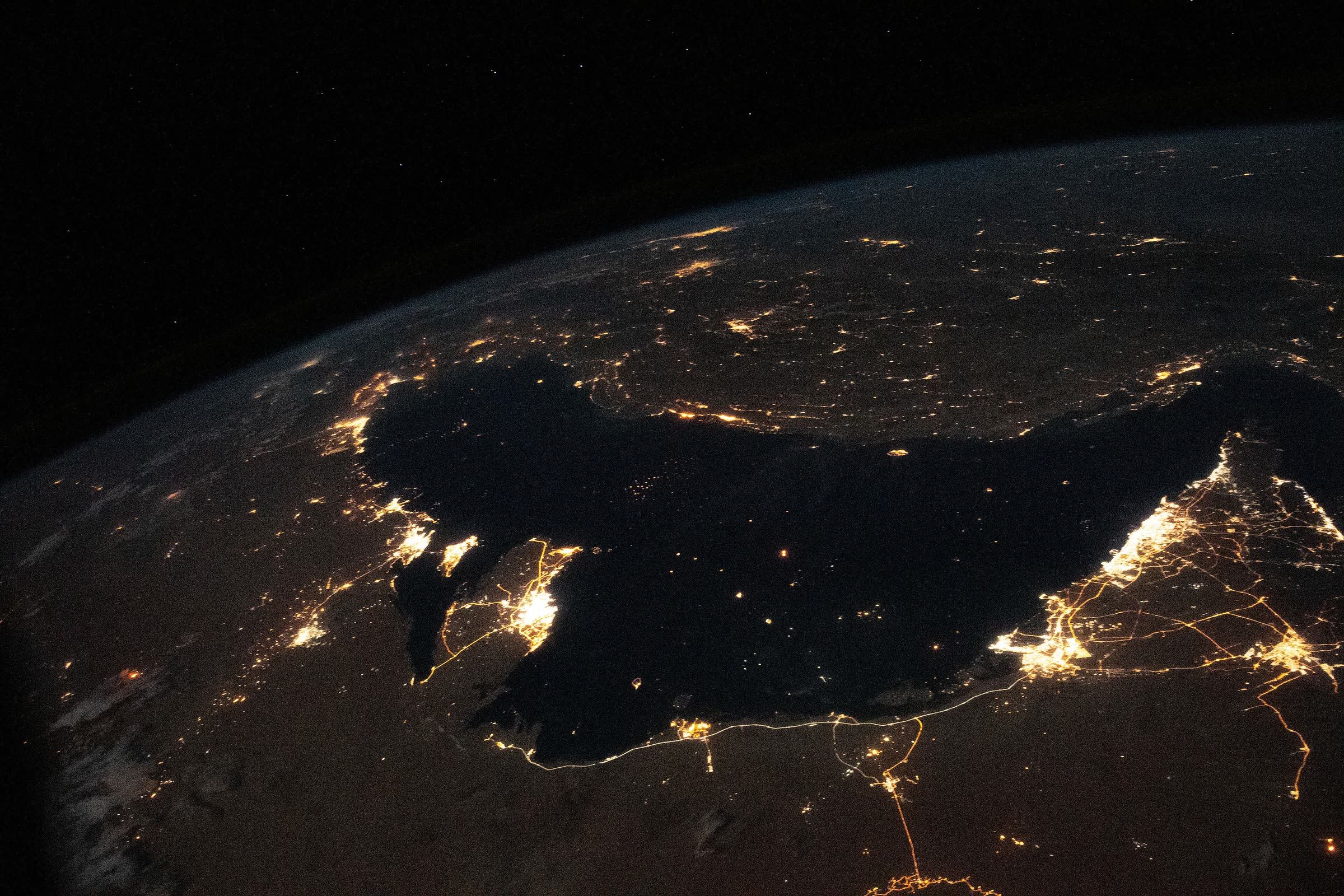
Iran and the Arab Gulf states form one system, and its defining feature is concentration. The region's hydrocarbon exports, a large share of its electricity and nearly all of its drinking water depend on a small number of fixed installations reachable from a single narrow waterway. Security competition here is therefore not mainly about territory. It is about access — who can move what, through where, and at what price. This module explains the systems that carry Gulf oil and gas, the states that depend on them, and what is structurally exposed when they are disrupted.

Read the full assessment

~20m b/d
Crude oil and products through the Strait of Hormuz
As of 2025highCongressional Research Service — Iran, the Gulf and the Strait of Hormuz
~⅓
Share of global crude oil trade moving through the strait
As of 2025highCongressional Research Service — Iran, the Gulf and the Strait of Hormuz
~19%
Share of world LNG exports that must transit the strait
As of 2025highCongressional Research Service — Iran, the Gulf and the Strait of Hormuz
28 Feb 2026
Start of the current interstate war
6 of 6
Gulf Arab states whose territory Iran has struck
440.9 kg
Uranium enriched to 60%, last IAEA-verified — not a current inventory
As of 2025-06-13highIAEA Iran verification and NPT safeguards reporting
20 sites
Declared nuclear sites the IAEA is denied access to
As of 2026-06highIAEA Iran verification and NPT safeguards reporting
Coverageby country
  • Iran30 recordsOne pole of the system, and the actor whose decisions determine access to the strait. The deepest lens in the module: the state and its government layer, the four parallel armed structures, the nuclear verification file, Kharg Island and the Goreh–Jask line, and the relationships that carry the war and the sanctions architecture.
  • Saudi Arabia20 recordsThe largest producer and the owner of the principal Hormuz alternative. The lens holds the state and its government layer, the armed forces and the separately commanded National Guard, the East–West pipeline and its Red Sea outlet, Ras Tanura and Abqaiq, and the defence arrangements reached outside the Cooperation Council.
  • United Arab Emirates16 recordsThe most heavily struck Gulf state and owner of the second bypass. The lens holds the state and its government layer, the armed forces, the ADCOP corridor to Fujairah with the Habshan and Ruwais complexes, and the security relationship with Israel.
  • Qatar11 recordsThe most structurally exposed state in the system, and its principal mediator. The lens holds the state and its government layer, the armed forces, Ras Laffan and the North Dome field it draws on, the liquefaction capacity lost in March 2026, and the mediation channel it has kept open through the war.
  • Kuwait10 recordsWhere the region's power-and-water dependence is sharpest. The lens holds the state and its government layer, the armed forces, the Mina al-Ahmadi terminal, and the Cooperation Council and basing relationships.
  • Bahrain12 recordsSmall, and diplomatically weighty out of proportion to its size. The lens holds the state and its government layer, the armed forces, the Sitra terminal, and the basing relationship that puts the US Fifth Fleet and the combined maritime commands on its territory.
  • Oman9 recordsThe mediation channel of record, and the one Gulf Arab state whose exports leave outside the strait. The lens holds the state and its government layer, the armed forces, the Mina al-Fahal terminal on the Gulf of Oman, joint operation of the strait's traffic scheme, and the diplomatic relationship with Tehran that the others do not have.
  • Regional — applies to all seven21 recordsThe waterway itself, the sea areas around it, and the arrangements that operate across all seven states — the Cooperation Council, the combined maritime commands, and the war as a single object. They name no one country because the system is what they are about. Read them under every lens, not none.

Counts cover this module’s mapped places, events, zones, campaigns, terrain, corridors, impact chains and actor profiles. A country count is what is specifically about that country; it is not the whole of what bears on it.

Backgroundwhy this matters, and the conflict in 6 points

Why it matters

About a fifth of world petroleum liquids consumption and roughly a third of global crude oil trade moves through the Strait of Hormuz, along with close to a fifth of the world's liquefied natural gas. Every alternative route combined carries a fraction of that, and for LNG there is no alternative at all. What happens in this system reaches household energy bills, shipping costs and industrial supply chains on other continents.

The conflict in five minutes

6 points, composed from this conflict’s own sourced records — nothing here is a new claim.

One waterway carries the region's exports, and there is no second one

Roughly 20 million barrels a day of crude and products pass the Strait of Hormuz — about a third of global crude oil trade — along with close to a fifth of the world's LNG. Every pipeline bypass combined moves a fraction of that, and for liquefied gas there is no fixed bypass at all.

A strait can close commercially while staying physically open

Iran declared the strait closed on 28 February 2026 and it was never sealed. What stopped the traffic was the withdrawal of marine war-risk cover a week later. Legal access, physical access and commercial access are three different things in this system, and they have moved independently throughout the war.

An interstate war has been running since 28 February 2026

United States and Israeli strikes on Iran opened that day and Israel killed Supreme Leader Ali Khamenei. Iran has struck all six Gulf Arab states. The United States and Israel are participants in this system, not observers of it.

Iran has three parallel militaries, not one

The Artesh, the Revolutionary Guard and the Law Enforcement Command each answer to the Supreme Leader in parallel. Iran runs two separate navies with different missions in the same sea, and understanding which one a report means is usually the difference between reading a Gulf incident correctly and not.

The Gulf states are not a bloc, and their responses have diverged

Six states share one waterway, one institution and one exposure, and answered the same war differently. Two have signed defence arrangements outside the Gulf Cooperation Council since it began.

Nobody can currently verify what Iran's nuclear programme is doing

The IAEA stopped verification activities on 28 February 2026 and is denied access to twenty declared sites. That absence is the dominant fact on the file, and it is evidence for neither suspension nor continuation.

The system, as analytical objectsWhat Vigil assesses about Iran–Gulf, as 5 selectable objects. Each carries its own claims, registers, grades and dates, and each opens as itself in Explore — not as a section index.Open Iran–Gulf in Explore

Vigil assessment · Observed

Trajectory

The module’s current phase — Six months that reorganised the region's access (Since 28 February 2026) — and the newest dated review.

3 recordsHigh confidenceAs of 2026-09-04

Vigil assessment

External relationships

The standing arrangements this module authors between its parties. Each line is the record’s own signature; the analysis, dates and sources are on the record.

26 recordsGraded per itemAs of 2026-09

Observed

What matters now

The live questions this module leads with, each pointing at the record where it is being worked out.

4 records

Vigil assessment · Observed

Economy

4 exposure channels and 6 watch items, as of 2026-08.

4 recordsModerate confidenceAs of 2026-08

Vigil assessment · Observed

Humanitarian

7 measured figures at regional granularity, as of 2026-09. No operational detail is published.

7 recordsGraded per itemAs of 2026-09

LatestThe newest published work on this conflict. Conflict reviewed 2026-09-04.Every dated review

Weekly Brief2026-09-04

Iran–Gulf baseline — 4 September 2026

6 developments2026-02-28 → 2026-09-04

The module's baseline picture at launch. Six months into an interstate war, the Strait of Hormuz has never been physically closed and has been commercially unusable since March: what stopped the traffic was the withdrawal of marine war-risk cover, not the water. Production shut-ins peaked above eleven million barrels a day and Qatar lost around 17% of its liquefaction capacity for a period its operator estimates in years. Iran has struck all six Gulf Arab states, two of which have since signed defence arrangements outside the Gulf Cooperation Council. The IAEA stopped verification activities in Iran on the war's opening day and can establish nothing about the programme since. No agreement has been in force since 17 August. No delta section appears below: this is the first brief for this module, so there is nothing to compare it against.

Theatre mapInteractive · approximate · as of 2026-09. Every marker here is a record, and the same markers are selectable in Explore's geography mode with the record open beside them.Open the map in Explore

Sea areas and strategic geography
Loading map…
Interactive map — tiles © OpenStreetMap contributors, © CARTO. Markers show broad, publicly documented locations; sensitive sites are generalized to area level. Zone fills, where shown, are broad and approximate context with their own dates and confidence — never precise boundaries. The map does not show current deployments, activity or operational readiness, and is not suitable for operational use. Status is dated and contextual — see themethodology.
Sea areas and strategic geography: broad · approximate · as of 2026-09 · Confidence: graded per zone
Zone legend — Sea areas and strategic geography

Every zone in this module is a SEA AREA. There is no land zone here, and that is deliberate: the analysis is about access to water and to fixed installations, not about who holds ground. The three areas show the enclosed Gulf, the approaches to the Strait of Hormuz and the open-ocean side beyond it — broad, generalised orientation geometry that never depicts naval positions, patrol areas, transit routes, minefields or strike zones. Crucially, no shading here states whether the strait is open: legal, physical and commercial access to that water have moved separately through this war, and a single fill cannot carry three different answers.

  • The Gulf — The enclosed Gulf — the sea into which six of the seven core states load their exports, with one outlet. As of 2026-09 · Confidence: High.
  • Strait of Hormuz approaches — Strait of Hormuz approaches — the water every Gulf cargo but Oman’s must cross. Not a depiction of whether it is open. As of 2026-09 · Confidence: Moderate.
  • Gulf of Oman approaches — Gulf of Oman approaches — the open-ocean side of the strait, and what any genuine bypass has to reach. As of 2026-09 · Confidence: High.

Watch4 questions and 10 observables Vigil is tracking on Iran–Gulf — each one a file it is following, not a forecast it is making.

  1. Is the Strait of Hormuz commercially usable again?

    Watch for marine war-risk cover being written for Hormuz transits at rates charterers accept, and for the Joint War Committee's listed-area treatment of the Gulf. The baseline is a market that closed rather than a waterway that did: protection-and-indemnity clubs issued 72-hour notices terminating war-risk extensions in March 2026 and commercial transits fell by more than 80% while the strait remained physically passable. The change that would count is cover available on terms charterers actually take up — not an announcement that cover exists, and not a single voyage.

    Analytical Note
  2. Has the IAEA regained meaningful verification access?

    Watch for inspections actually carried out at declared sites other than Bushehr, and for the Agency reporting that it has resumed verification activities. The baseline is that verification stopped on 28 February 2026, access is denied to twenty declared sites and one location outside facilities, and the only inspection since was at Bushehr on 1–3 June 2026. The change that would count is a completed inspection, not an undertaking to allow one — a distinction that is not theoretical here, because practical modalities to resume inspections were agreed in September 2025 and no inspections followed.

    Diplomacy record
  3. Does Iran have a joint command, or three parallel ones?

    Watch for official Iranian command documentation, an authoritative institutional account, or verified wartime command behaviour that distinguishes coordination from command. The baseline is a genuine disagreement between credible accounts: the Armed Forces General Staff is described as an apex command body holding operational control across the force structure, and the same evidence base describes Revolutionary Guard autonomy sufficient to make joint integration unattainable and the joint staff a deconfliction mechanism. The change that would count is institutional evidence, not the conduct of a single operation.

    Force Atlas
  4. Who attacked Ras Tanura?

    Watch for an official investigation report, independently corroborated forensic evidence, or a change in either party's position. The baseline is a confirmed physical event with a disputed attribution: Saudi Arabia attributed the March 2026 interception and terminal shutdown to Iran, Iran publicly denied targeting Gulf energy facilities, and Iranian messaging the same day was internally inconsistent — its defence ministry reported attacks on Qatari facilities and the Revolutionary Guard claimed a tanker strike. The change that would count is evidence from a party to neither account. Vigil publishes the physical event and both positions and adjudicates neither.

    Campaign record
10 further entriesthe rest of the standing watch list
  • Whether physical navigation conditions change

    Watch the International Maritime Organization's navigational assessments and formal warnings for the strait, and any independently corroborated statement that a hazard has been surveyed or cleared. The baseline is the IMO's April 2026 position that there is no safe transit anywhere in the strait — degraded, never sealed, and never at any point physically closed. The change that would count is a revised official navigational assessment. This module publishes no hazard locations, no lane geometry and no clearance information, and nothing that would resolve this observable requires any of them.

  • Whether enrichment and stockpile figures become verifiable again

    Watch for the Agency reporting a reconciled nuclear material accountancy for Iran, or a verified current figure for enrichment level, scale or centrifuge inventory. The baseline is that all of these are unverified and the Agency states it has lost continuity of knowledge: the last verified stockpile figures date from 13 June 2025 and are a historical baseline, not a current inventory. The change that would count is a published verified quantity with its own as-of date. Until one exists this module carries no 2026 figure and calculates none, and the absence of verification is not evidence that enrichment either stopped or continued.

  • Whether nuclear diplomacy moves from signalling to implementation

    Watch for an implemented mechanism rather than a stated intention — an inspection agreement acted on, safeguards access restored in practice, or a formal negotiating framework with named parties and a schedule. The baseline is a file with more undertakings than outcomes: a Board of Governors resolution urging cooperation was adopted on 10 June 2026, and the September 2025 modalities understanding produced no inspections. The change that would count is a step that can be checked against something other than its own announcement.

  • Whether a formal United States–Iran channel is re-established

    Watch for a new written arrangement between the two states, or an implemented confidence-building mechanism with a verifiable component. The baseline is that nothing is in force: the memorandum of understanding signed on 17 June 2026 and hosted by Pakistan was declared over on 7 July and expired unextended on 17 August. The change that would count is a document or a mechanism, not a meeting and not a statement of willingness. This module makes no assessment of whether talks are likely.

  • Whether the sanctions position changes, and in which system

    Watch the three legal systems separately, because they are separate: the United Nations measures that returned under the snapback, the European Union restrictive measures reimposed by Council decision on 29 September 2025, and United States measures including General License U of 20 March 2026 authorising certain Iranian petroleum transactions. The baseline is that all three are in force and were not adopted together. The change that would count is an amending instrument in one of them — and a change in one system is not a change in the others, which is why a sanctions headline is never a status for the file as a whole.

  • Whether Gulf air and missile defence becomes institutionally integrated

    Watch for formal GCC decisions creating shared machinery — a joint early warning system, a shared air picture, or common rules of engagement — and for the Unified Military Command in Riyadh acquiring a function it does not have. The baseline is an institution without an operational command: the Command exists and runs exercises, and reporting through this war describes the six states as having none of those three things. The change that would count is an institutional act, not a joint exercise and not simultaneous national procurement. Nothing here describes coverage, holdings or readiness.

  • Whether the standing United States regional arrangement changes

    Watch for changes to formal access and basing arrangements with Gulf states, for command architecture changes at CENTCOM level, and for congressional action on an authorisation for the use of military force. The baseline is a posture whose access agreements date from the period after 1990–91, a war conducted without an authorisation, and measures directing the removal of United States forces rejected in both chambers in March 2026. The change that would count is an instrument — an agreement signed, amended or ended, or a vote carried. This observable is institutional by construction and tracks no aircraft, ships, units or deployments.

  • Whether the multinational maritime mission changes character

    Watch for a change in the stated mandate of the Combined Maritime Forces or in its 47-nation membership. The baseline is a partnership whose stated mission is against illicit non-state actors, headquartered in Bahrain, commanded by the same officer who commands the United States Fifth Fleet and NAVCENT — and which is not a party to the interstate war on that account. The change that would count is a formal mandate change or a member's declared withdrawal. The shared commander is an institutional fact and not evidence of a merged mission, and this module does not treat coalition activity as belligerent activity.

  • Whether a pre-war marine insurance baseline becomes publishable

    Watch for a published pre-war war-risk premium series for Hormuz transits from an underwriting or broking source. The baseline is a gap this module states rather than fills: wartime quoted rates are recorded with their dates, and the pre-war denominator is not established, so no multiple, no percentage increase and no ratio is published anywhere in the module. The change that would count is a dated pre-war series from a source that writes or brokes the cover. Until then the mechanism is described and the arithmetic is not attempted.

Evidence and review status

Conflict reviewed
2026-09-04— the date of this conflict’s most recent verified Weekly Brief. It records a review of the conflict as a whole, not a revalidation of every underlying record; each record carries its own date.
Assessed as of
2026-09 — the date this conflict’s standing geographic and situational claims are drawn to.
Review cadence
Weekly review / event-driven updates — quiet weeks are published as quiet reviews rather than as silence.

Scope of this coverage. This module describes a regional system, and that system is currently operating under active interstate war conditions: a United States and Israeli strike campaign against Iran began on 28 February 2026 and was continuing at the time of writing, with Iranian strikes on all six Gulf Arab states and sustained disruption to the Strait of Hormuz. Vigil covers that war as events, campaigns and disruptions inside the system — not as the module's subject, and not as a war tracker. Nothing here forecasts the conflict's course.

Found an error in Iran–Gulf coverage? Corrections are logged in public with the date and what changed — see the corrections log.