
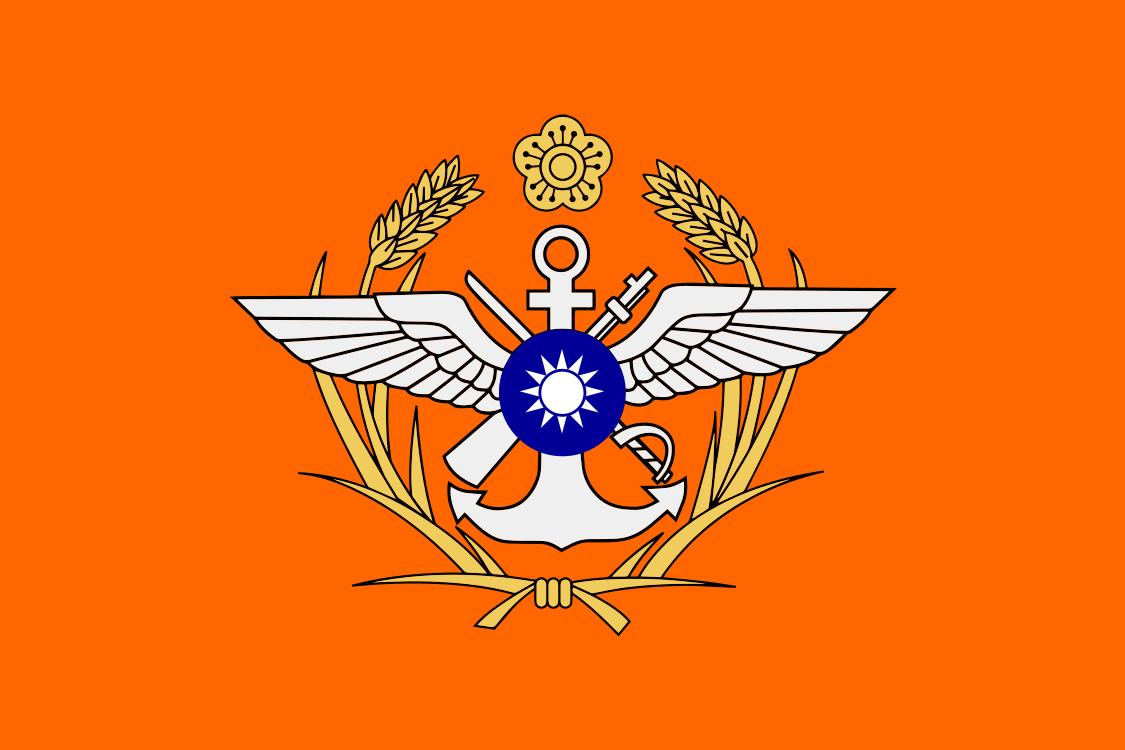
- Institutional emblem · official · carried by Republic of China Armed Forces
- 國家隸屬 · 臺灣
- Vigil類別圖示 · 非官方徽記
識別來源
Institutional emblem: Flag of the Ministry of National Defense — the ministry these forces sit under — carried by Republic of China Armed Forces, not issued to this record. THE MINISTRY'S FLAG, NOT THE ARMED FORCES' OWN, and the label says so: the Republic of China Armed Forces are under civilian control through the Ministry of National Defense, and the ministry's flag is the institutional identity the whole structure sits beneath. The services that have flags of their own author them and override this; the ones that do not inherit it, which is the correct reading of what they are. WHAT CHANGED THE EARLIER REFUSAL. The Taiwan pass refused every ROC mark on the SYMBOL test — the ROC Copyright Act names no exclusion for military symbols, so no supplied file could clear. That reasoning was about the FILE'S LICENCE and was applied to a question it does not reach: this Commons file is tagged PUBLIC DOMAIN in its own right, with the ROC Ministry of National Defence recorded as the author of the original, so there is no licence to satisfy and no attribution or share-alike obligation attaches. FILE: Wikimedia Commons "ROC Ministry of National Defense Flag.svg", public domain. Optimised for web display — editor metadata removed and coordinate precision reduced to two decimals on a 1000-unit canvas; no path, colour, proportion or viewBox altered.
國家隸屬:臺灣。
較小的方形標記是Vigil的類別符號,依據本紀錄自身的領域、層級與角色繪製——並非官方徽章。
概要
臺灣的海上軍種,包括其海軍陸戰隊——日益朝向海上拒止而非制海。
- 範圍
- 結構、角色、沿革與連結。已發布2筆下屬紀錄。
- 隸屬
- 隸屬:已證實
- 來源
- 紀錄所載:4
- 紀錄狀態
- 完整
- 廣泛活動地區
- Waters around Taiwan and its administered island groups
- 重要歷史
- STRUCTURE. Two records sit beneath the service in this atlas: the Fleet Command, which holds the sea-going forces, and the Marine Corps, which is a service arm rather than a separate service and whose mission is counter-landing and island reinforcement rather than expeditionary assault. The service also runs logistics, training and area commands that are not recorded here because they explain nothing this module asks about. What the two recorded organisations do explain is the argument running through the whole service: a fleet holding both large surface combatants built for sea control and small missile craft and minelayers built for denial, and a marine corps whose role inverted from the offensive one its name implies. Built during the Cold War around donated and purchased surface combatants for a sea-control mission that the changing balance made unsustainable. The clearest strategic shift in the Taiwanese military over the past decade has happened here: away from a small number of large surface combatants and toward numerous smaller missile-armed vessels, land-based anti-ship missiles, mining capability and, since the 2010s, an indigenous submarine programme. The Hai Kun prototype has been conducting sea trials rather than entering service.
- 優勢
- A substantial and largely indigenous anti-ship missile inventory, a growing force of fast missile-armed vessels well suited to the geography, and the inherent advantages of operating in home waters within range of land-based support.
- 限制
- Large surface combatants are increasingly difficult to survive with against a far larger opposing navy and missile force — the reason for the shift toward smaller platforms. The submarine programme is slow, expensive and unproven, and its schedule has repeatedly moved. Vigil publishes no basing, disposition or readiness information.
據報與歷史上的裝備關聯
Hai Kun-class submarine (Indigenous Defence Submarine): Indigenous submarine programme in sea trials; not an in-service capability claim.
戰役
將此組織列為參與方的戰役。該關係由戰役紀錄擁有並評定等級;此清單為計算所得。
- 門檻之下的持續壓力 Opposing force · Intensifying since 2020 · high confidence · as of 2026-06
- 強制性海上攔阻——從隔離到封鎖 Affected party · Assessed contingency · moderate confidence · as of 2026-06
系統入口
此紀錄與Vigil其他部分的連結處。每一列之所以列在這裡,是因為此組織確實與之相連。
評估截至 — 2026-09 最近檢視 — 2026-09-09
在結構中檢視此部隊 互動式:選取此紀錄並追蹤與其關聯的內容。