
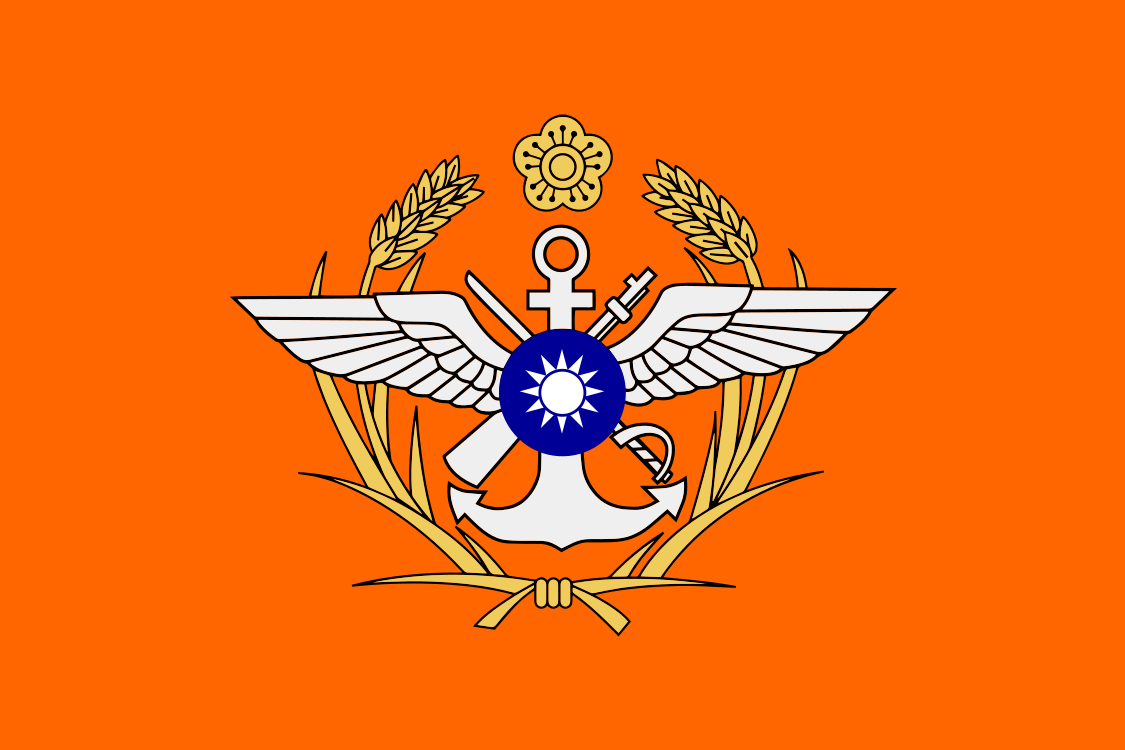
- Institutional emblem · official · carried by Republic of China Armed Forces
- State affiliation · Taiwan
- Vigil category device · not official insignia
Identity provenance
Institutional emblem: Flag of the Ministry of National Defense — the ministry these forces sit under — carried by Republic of China Armed Forces, not issued to this record. THE MINISTRY'S FLAG, NOT THE ARMED FORCES' OWN, and the label says so: the Republic of China Armed Forces are under civilian control through the Ministry of National Defense, and the ministry's flag is the institutional identity the whole structure sits beneath. The services that have flags of their own author them and override this; the ones that do not inherit it, which is the correct reading of what they are. WHAT CHANGED THE EARLIER REFUSAL. The Taiwan pass refused every ROC mark on the SYMBOL test — the ROC Copyright Act names no exclusion for military symbols, so no supplied file could clear. That reasoning was about the FILE'S LICENCE and was applied to a question it does not reach: this Commons file is tagged PUBLIC DOMAIN in its own right, with the ROC Ministry of National Defence recorded as the author of the original, so there is no licence to satisfy and no attribution or share-alike obligation attaches. FILE: Wikimedia Commons "ROC Ministry of National Defense Flag.svg", public domain. Optimised for web display — editor metadata removed and coordinate precision reduced to two decimals on a 1000-unit canvas; no path, colour, proportion or viewBox altered.
State affiliation: Taiwan.
The smaller square mark is a Vigil category device, drawn from this record’s own domain, echelon and role — not an official insignia.
In brief
Taiwan's naval service, including its marine corps — increasingly oriented toward sea denial rather than sea control.
- Scope
- Structure, role, lineage and links. 2 subordinate records published.
- Subordination
- Subordination confirmed
- Sources
- 4 on the record
- Record state
- Full
- Broad area of activity
- Waters around Taiwan and its administered island groups
- Notable history
- STRUCTURE. Two records sit beneath the service in this atlas: the Fleet Command, which holds the sea-going forces, and the Marine Corps, which is a service arm rather than a separate service and whose mission is counter-landing and island reinforcement rather than expeditionary assault. The service also runs logistics, training and area commands that are not recorded here because they explain nothing this module asks about. What the two recorded organisations do explain is the argument running through the whole service: a fleet holding both large surface combatants built for sea control and small missile craft and minelayers built for denial, and a marine corps whose role inverted from the offensive one its name implies. Built during the Cold War around donated and purchased surface combatants for a sea-control mission that the changing balance made unsustainable. The clearest strategic shift in the Taiwanese military over the past decade has happened here: away from a small number of large surface combatants and toward numerous smaller missile-armed vessels, land-based anti-ship missiles, mining capability and, since the 2010s, an indigenous submarine programme. The Hai Kun prototype has been conducting sea trials rather than entering service.
- Strengths
- A substantial and largely indigenous anti-ship missile inventory, a growing force of fast missile-armed vessels well suited to the geography, and the inherent advantages of operating in home waters within range of land-based support.
- Limitations
- Large surface combatants are increasingly difficult to survive with against a far larger opposing navy and missile force — the reason for the shift toward smaller platforms. The submarine programme is slow, expensive and unproven, and its schedule has repeatedly moved. Vigil publishes no basing, disposition or readiness information.
Subordinate formations
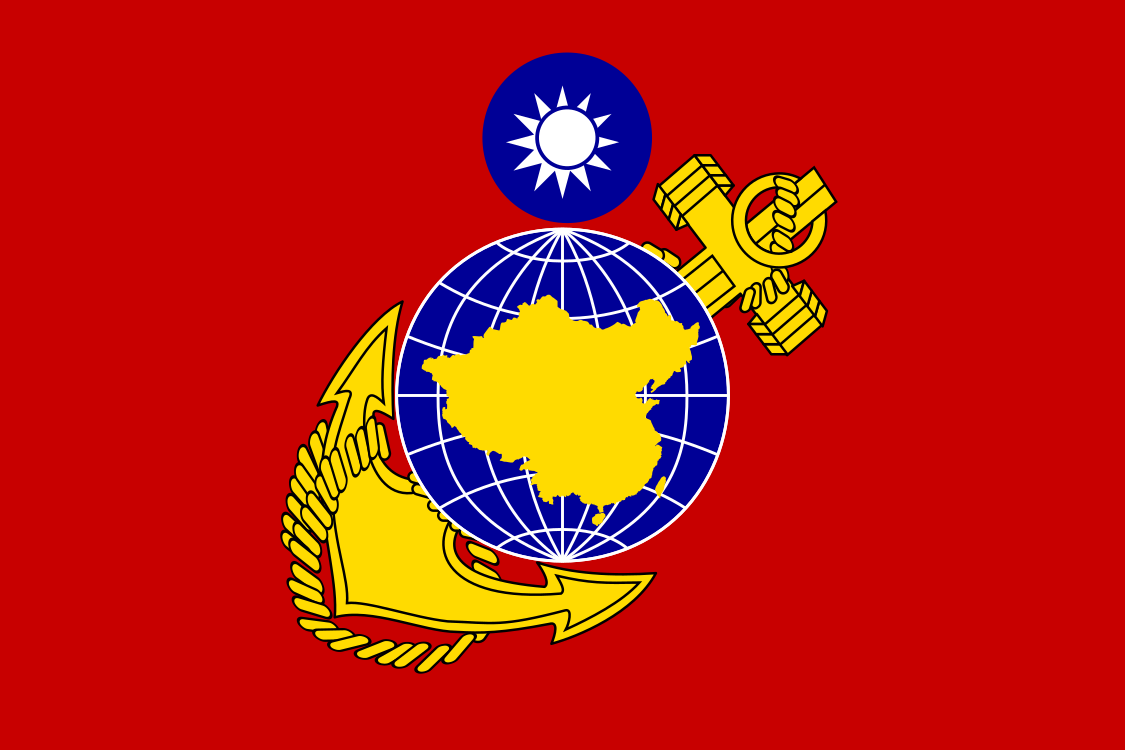
Rows are layout only — position and order carry no hierarchy, importance, sequence or strength. Every record shown is an immediate subordinate of the selected organisation.
Documented equipment
Reported & historical equipment associations
Hai Kun-class submarine (Indigenous Defence Submarine): Indigenous submarine programme in sea trials; not an in-service capability claim.
Campaigns
Campaigns naming this organisation as a participant. The campaign record owns the relationship and grades it; this list is computed.
- Sustained pressure below the threshold Opposing force · Intensifying since 2020 · high confidence · as of 2026-06
- Coercive maritime interdiction — quarantine to blockade Affected party · Assessed contingency · moderate confidence · as of 2026-06
Quick actions
System access
Where this record connects into the rest of Vigil. Each row is here because this organisation actually reaches it.
Assessed as of — 2026-09 Last reviewed — 2026-09-09
See this force in the structure Interactive: select this record and follow what connects to it.