
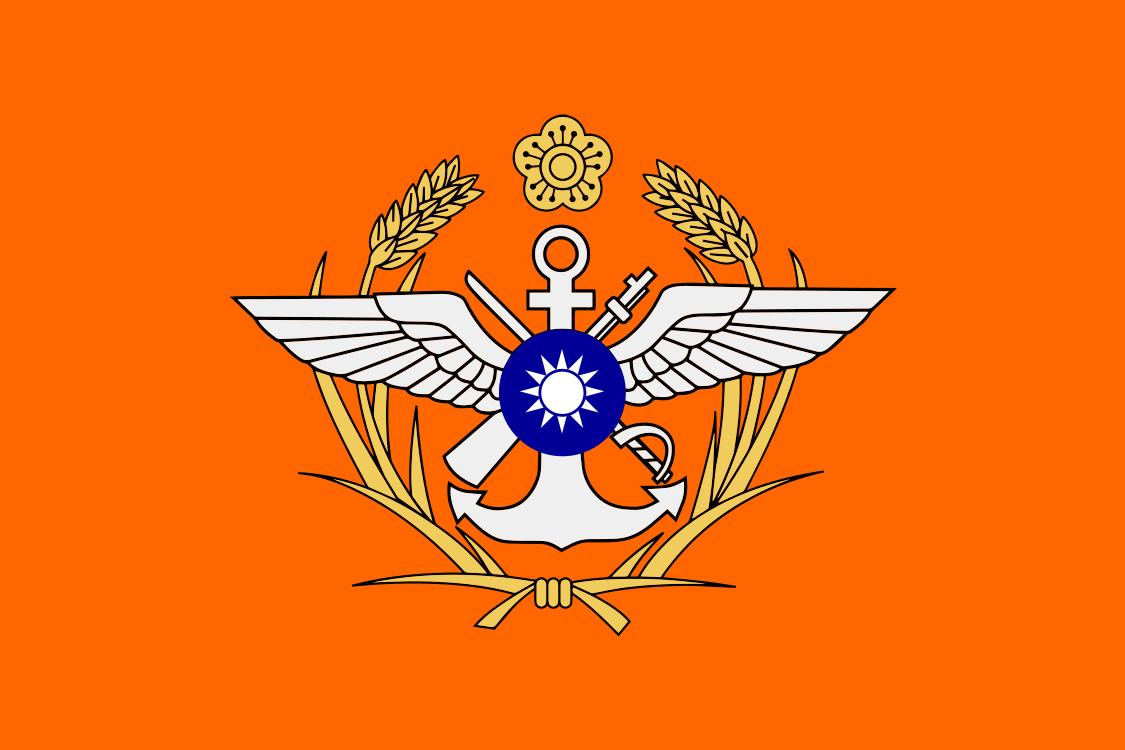
- Institutional emblem · official · carried by Republic of China Armed Forces
- 國家隸屬 · 臺灣
- Vigil類別圖示 · 非官方徽記
識別來源
Institutional emblem: Flag of the Ministry of National Defense — the ministry these forces sit under — carried by Republic of China Armed Forces, not issued to this record. THE MINISTRY'S FLAG, NOT THE ARMED FORCES' OWN, and the label says so: the Republic of China Armed Forces are under civilian control through the Ministry of National Defense, and the ministry's flag is the institutional identity the whole structure sits beneath. The services that have flags of their own author them and override this; the ones that do not inherit it, which is the correct reading of what they are. WHAT CHANGED THE EARLIER REFUSAL. The Taiwan pass refused every ROC mark on the SYMBOL test — the ROC Copyright Act names no exclusion for military symbols, so no supplied file could clear. That reasoning was about the FILE'S LICENCE and was applied to a question it does not reach: this Commons file is tagged PUBLIC DOMAIN in its own right, with the ROC Ministry of National Defence recorded as the author of the original, so there is no licence to satisfy and no attribution or share-alike obligation attaches. FILE: Wikimedia Commons "ROC Ministry of National Defense Flag.svg", public domain. Optimised for web display — editor metadata removed and coordinate precision reduced to two decimals on a 1000-unit canvas; no path, colour, proportion or viewBox altered.
國家隸屬:臺灣。
較小的方形標記是Vigil的類別符號,依據本紀錄自身的領域、層級與角色繪製——並非官方徽章。
概要
負責臺灣後備動員與民防協調的機關——武裝部隊與社會韌性之間的制度橋梁。
- 範圍
- 結構、角色、沿革與連結。已發布下屬紀錄1筆。
- 隸屬
- 隸屬:已證實
- 來源
- 紀錄所載:4
- 紀錄狀態
- 部分
- 廣泛活動地區
- Taiwan and its administered territories, working through municipal and county governments
- 重要歷史
- Authorised by the Legislative Yuan in May 2021, inaugurated on 30 December 2021 and formally established on 1 January 2022, by merging the All-out Defense Mobilization Office with the Armed Forces Reserve Command. The merger is the substance of the reform rather than an administrative tidy-up: it put reserve mobilisation, materiel mobilisation and civil-defence coordination under one agency reporting to the Ministry of National Defense, where they had previously been split between a policy office and a troop command. The Armed Forces Reserve Command continues as an affiliated organisation beneath it. Four divisions carry the work — Manpower Mobilization, Materials Mobilization, Mobilization Management and Mobilization Integration — and the last of those names the problem the agency exists to solve, which is that mobilisation in Taiwan runs through civilian local government as much as through military channels.
- 優勢
- Its authority spans the civil–military boundary, which is where Taiwanese resilience planning actually sits: the same agency publishes the public civil-defence handbook, coordinates the annual Urban Resilience exercises with municipal and county governments, and administers reserve call-ups. Three editions of the handbook have been issued since 2022, the most recent in September 2025 with a clearer focus on wartime scenarios than its predecessor. The 2026 Urban Resilience exercise cycle was run with eleven municipal and county governments from April onward, and its mobile-network throttling component in August 2026 was the first population-scale continuity test of its kind conducted by any democracy.
- 限制
- An agency can standardise a training requirement and cannot by itself produce readiness. The 2026 reform raised education mobilisation call-ups to a uniform fourteen days, replacing a five-to-seven-day programme and removing the double-credit arrangement that had softened the longer format since it was piloted in 2022, and the ministry reports a 93 per cent rate of matching reservists to their original posts. Those are inputs and administrative outcomes. Whether the resulting reserve system performs is contested among Taiwan's own analysts, surveys consistently show modest personal preparedness, and Vigil publishes no assessment of reserve readiness, no strengths and no mobilisation timelines. A training standard, an exercise and a demonstrated capability are three different things and this record keeps them apart.
相關組織
- 中華民國陸軍 Institutionally linked to · moderate confidence
Reserve mobilisation is executed principally through army structures.
沿革與機構歷史
Predecessors: All-out Defense Mobilization Office
戰役
將此組織列為參與方的戰役。該關係由戰役紀錄擁有並評定等級;此清單為計算所得。
- 國防改革與民間韌性計畫 Primary force · Since 2022 · moderate confidence · as of 2026-06
The reserve and mobilisation reorganisation is the programme's least visible and most structurally significant component.
關鍵事件
後備召集統一為十四天
臺灣國防部於2026年6月確認,所有教育召集一律統一為十四天,取代先前五至七天的方案,並取消自2022年試辦十四天制以來用以緩和其衝擊的雙倍計次安排。國防部報告,讓後備軍人回到原單位職缺的政策媒合率為93%,使訓練得以按固定編組進行,並表示有意擴大實戰化訓練,以及修訂涉及女性後備軍人的規定。後備動員由全民防衛動員署主管,該署於2022年1月1日由動員單位與國軍後備指揮部整併而成。
漢光42號演習歷時十天後結束
臺灣第42屆漢光演習於2026年8月14日在臺北博愛營區結束,距8月5日開始已十天,參謀總長、各軍種司令與各區域指揮官均出席。國防部長顧立雄表示,此次演習首次以各層級指揮所全面實際運作進行,並延續無劇本形式,部隊依據不斷演變的命令應處,而非依照預演的程序;他嘉許參演官兵,並要求軍官處理演習所發現的問題。報導描述此為臺灣自1984年以來規模最大的軍事演習,動員超過20,000名後備軍人。十天中的組成部分包括此處另行記錄的兩段行動網路限速時段、武器生產分散與民間製造業動員、在軍事演習中進行的城鎮韌性訓練,以及首次海軍–海巡聯合反封鎖演練。中國國防部在演習最後一天首次就此發表正式評論,發言人Chen Xi稱其為虛張聲勢、勞民傷財的鬧劇,並指控執政黨煽動戰爭恐慌。
系統入口
此紀錄與Vigil其他部分的連結處。每一列之所以列在這裡,是因為此組織確實與之相連。
評估截至 — 2026-09 最近檢視 — 2026-09-09
在結構中檢視此部隊 互動式:選取此紀錄並追蹤與其關聯的內容。