
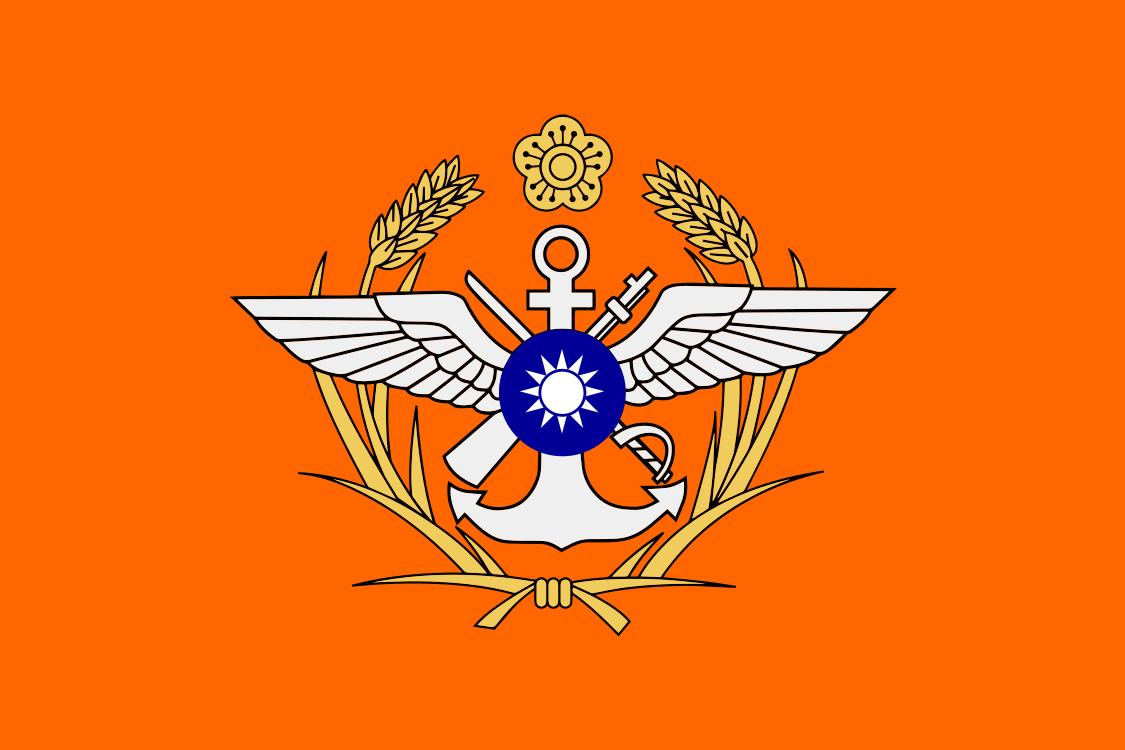
- Institutional emblem · official · carried by Republic of China Armed Forces
- Przynależność państwowa · Tajwan
- Symbol kategorii Vigil · nie jest to oficjalne oznaczenie
Pochodzenie tożsamości
Institutional emblem: Flag of the Ministry of National Defense — the ministry these forces sit under — carried by Republic of China Armed Forces, not issued to this record. THE MINISTRY'S FLAG, NOT THE ARMED FORCES' OWN, and the label says so: the Republic of China Armed Forces are under civilian control through the Ministry of National Defense, and the ministry's flag is the institutional identity the whole structure sits beneath. The services that have flags of their own author them and override this; the ones that do not inherit it, which is the correct reading of what they are. WHAT CHANGED THE EARLIER REFUSAL. The Taiwan pass refused every ROC mark on the SYMBOL test — the ROC Copyright Act names no exclusion for military symbols, so no supplied file could clear. That reasoning was about the FILE'S LICENCE and was applied to a question it does not reach: this Commons file is tagged PUBLIC DOMAIN in its own right, with the ROC Ministry of National Defence recorded as the author of the original, so there is no licence to satisfy and no attribution or share-alike obligation attaches. FILE: Wikimedia Commons "ROC Ministry of National Defense Flag.svg", public domain. Optimised for web display — editor metadata removed and coordinate precision reduced to two decimals on a 1000-unit canvas; no path, colour, proportion or viewBox altered.
Przynależność państwowa: Tajwan.
Mniejszy kwadratowy znak to symbol kategorii Vigil, wyprowadzony z domeny, szczebla i roli podanych w samym wpisie — nie jest to oficjalne oznaczenie.
W skrócie
Dowództwo operacyjne skupiające siły pełnomorskie Marynarki Wojennej Republiki Chińskiej — struktura, przez którą musi przejść zwrot od panowania na morzu do odmowy dostępu do morza.
- Zakres
- Struktura, rola, rodowód i powiązania. Nie opublikowano wpisów podległych.
- Podporządkowanie
- Podporządkowanie: potwierdzone
- Źródła
- We wpisie: 4
- Stan wpisu
- Częściowy
- Szeroki obszar działania
- Waters around Taiwan and its administered island groups
- Istotna historia
- The Navy Command's operational arm, holding the fleets and squadrons that go to sea while the service headquarters handles force generation. Its composition is where Taiwan's naval argument becomes visible: the older half of the force is built around a small number of large surface combatants acquired for a sea-control mission, and the newer half around fast missile-armed corvettes, purpose-built minelayers commissioned from 2022 and an indigenous submarine still in trials. The command has to operate both at once, and the annual Han Kuang exercises are where the two halves are seen doing different jobs — the large hulls performing presence and escort, the small ones practising dispersal and denial.
- Mocne strony
- Operates in home waters within range of land-based anti-ship missiles and air defence, which is the condition that makes a denial force viable at all. The mine-warfare and fast-attack components are recent, purpose-built and matched to the geography rather than inherited from a different mission.
- Ograniczenia
- Large surface combatants in a strait covered by a much larger missile force are a survivability problem the command cannot solve by employment, and outside analysts consistently say so. Taiwan's own mine-warfare capability is assessed by specialist research as still short of the concept it is meant to serve — a small purpose-built minelayer force is not the same thing as a demonstrated ability to lay a barrier under fire. Vigil publishes no basing, no hull counts by class, no dispositions and no readiness.
Udokumentowany sprzęt
Zgłoszone i historyczne powiązania ze sprzętem
Hai Kun-class submarine (Indigenous Defence Submarine): Programme in trials; not an in-service capability claim.
Kluczowe wydarzenia
Han Kuang 42 kończy się po dziesięciu dniach
42. edycja tajwańskich ćwiczeń Han Kuang zakończyła się 14 sierpnia 2026 r. w obozie Bo'ai w Tajpej, dziesięć dni po rozpoczęciu 5 sierpnia, w obecności szefa sztabu generalnego, dowódców rodzajów sił zbrojnych i dowódców regionalnych. Minister obrony Wellington Koo powiedział, że po raz pierwszy ćwiczenia przebiegały przy w pełni działających stanowiskach dowodzenia na wszystkich szczeblach i kontynuowały format bez scenariusza, w którym jednostki reagują na napływające rozkazy, a nie na przećwiczoną sekwencję; pochwalił uczestniczących żołnierzy i polecił oficerom zająć się problemami ujawnionymi w trakcie ćwiczeń. Relacje opisują je jako największe ćwiczenia wojskowe Tajwanu od 1984 r., z mobilizacją ponad 20,000 rezerwistów. W ciągu dziesięciu dni ich komponenty obejmowały dwa okna ograniczania przepustowości sieci komórkowej, odnotowane tu osobno, rozproszenie produkcji uzbrojenia i mobilizację cywilnej produkcji przemysłowej, szkolenie z odporności miejskiej prowadzone w ramach ćwiczeń wojskowych oraz pierwsze wspólne ćwiczenia przeciwblokadowe marynarki wojennej i straży przybrzeżnej. Ministerstwo obrony Chin wydało swój pierwszy oficjalny komentarz na temat ćwiczeń w ich ostatnim dniu; rzecznik Chen Xi nazwał je pozerską, marnotrawną farsą i oskarżył partię rządzącą o podsycanie paniki wojennej.
Szybkie działania
Dostęp do systemu
Miejsca, w których ten wpis łączy się z resztą Vigil. Każdy wiersz jest tu dlatego, że ta organizacja rzeczywiście tam sięga.
Ocena na dzień — 2026-09 Ostatni przegląd — 2026-09-09
Zobacz te siły w strukturze Interaktywnie: wybierz ten wpis i prześledź, co się z nim łączy.